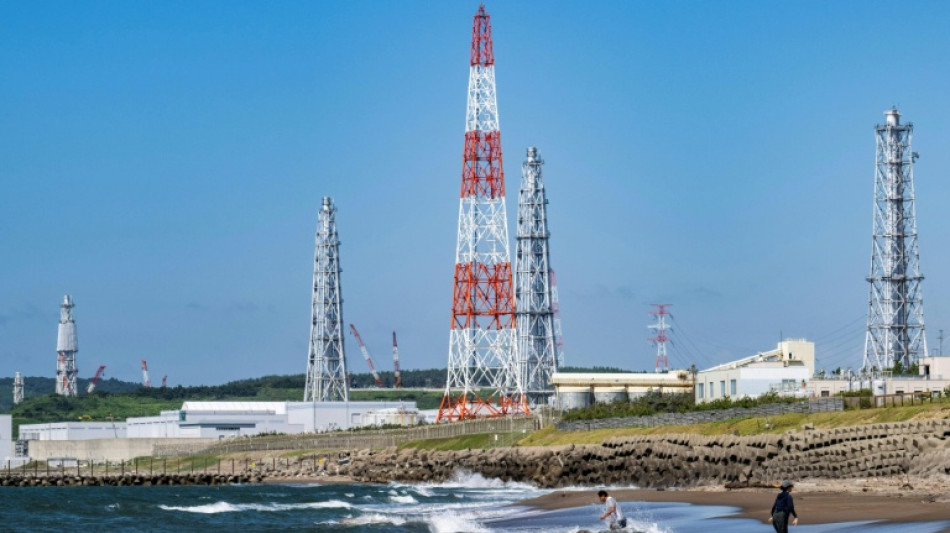
Japan restarts world's biggest nuclear plant again / Photo: Yuichi YAMAZAKI - AFP/File

Japan switched on the world's biggest nuclear power plant again on Monday, its operator said, after an earlier attempt was quickly suspended due to a minor glitch.
A problem with a monitoring alarm in January forced the suspension of its first restart since the 2011 Fukushima disaster.
The Kashiwazaki-Kariwa plant in the Niigata region restarted at 2:00 pm (0500 GMT), the Tokyo Electric Power Company (TEPCO) said in a statement.
The facility had been offline since Japan pulled the plug on nuclear power after a colossal earthquake and tsunami sent three reactors at the Fukushima atomic plant into meltdown.
But now Japan is turning to atomic energy to reduce its reliance on fossil fuels, achieve carbon neutrality by 2050 and meet growing energy needs from artificial intelligence.
Conservative Prime Minister Sanae Takaichi, who pulled off a thumping election victory on Sunday, has promoted nuclear power to energise the Asian economic giant.
TEPCO initially moved to start one of seven reactors at the Kashiwazaki-Kariwa plant on January 21 but shut it off the following day after a monitoring system alarm sounded.
The alarm had picked up slight changes to the electrical current in one cable even though these were still within a range considered safe, TEPCO officials told a news conference last week.
The firm has changed the alarm's settings as the reactor is safe to operate.
Commercial operations will commence on or after March 18 after another comprehensive inspection, according to TEPCO officials.
Kashiwazaki-Kariwa is the world's biggest nuclear power plant by potential capacity, although just one reactor of seven was restarted.
Fourteen reactors, mostly in western and southern Japan, have resumed operation since the post-Fukushima shutdown under strict safety rules, with 13 running as of mid January.
Kashiwazaki-Kariwa is the first TEPCO-run unit to restart since 2011. The company also operates the stricken Fukushima Daiichi plant, now being decommissioned.
The vast Kashiwazaki-Kariwa complex has been fitted with a 15-metre-high (50-foot) tsunami wall, elevated emergency power systems and other safety upgrades.
But public opinion in the area around the plant is deeply divided: Around 60 percent of residents oppose the restart, while 37 percent support it, according to a survey conducted by Niigata prefecture in September.
Residents have raised concerns about the risk of a serious accident, citing frequent cover-up scandals, minor accidents and evacuation plans they say are inadequate.
On January 8, seven groups opposing the restart submitted a petition signed by nearly 40,000 people to TEPCO and Japan's Nuclear Regulation Authority.
"We will continue to demonstrate our commitment to safety as our priority at the Kashiwazaki-Kariwa Nuclear Power Station through our actions and results," TEPCO said in a statement Monday.
P.Ghosh--MT