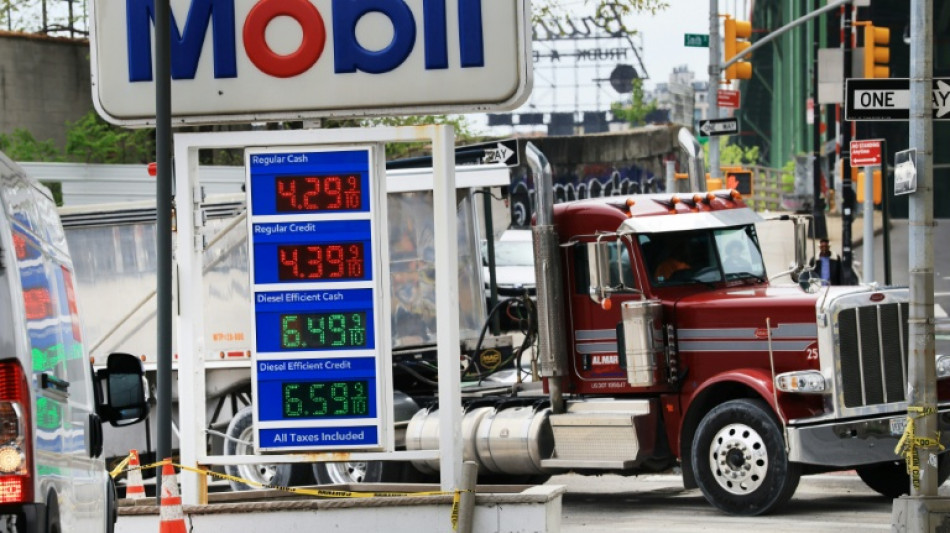
Oil industry sees war windfall but girds for political blowback / Photo: SPENCER PLATT - GETTY IMAGES NORTH AMERICA/AFP/File

US oil giants are set to report blowout profits Friday at a time when lofty gasoline prices are stressing consumers and exacerbating President Donald Trump's worries about upcoming midterm elections.
The second-quarter reports from ExxonMobil and Chevron reflect the overwhelmingly positive impacts to the industry's bottom line from the US-Iran war, which has led to an unprecedented supply shock due to the virtual closure of the Strait of Hormuz.
But huge oil industry profit increases often generate political blowback.
Even Trump, a strong supporter of fossil fuel interests, has lashed out over gasoline prices, announcing in June that he was directing the Department of Justice to investigate any "gouging" perpetrated by the industry.
"Gasoline prices better start going down a lot faster than what I'm seeing," Trump said in a June 24 social media post.
Trump at the time was questioning why gasoline prices had not fallen further in a period when a US-Iran ceasefire had translated into sharply lower crude prices.
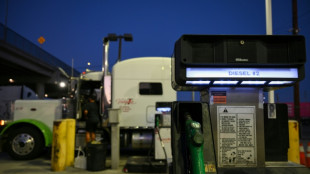
But US gasoline prices have shot back above $4 a gallon on the latest war escalations. On Thursday, US prices stood at $4.10 per gallon, about 31 percent above year-ago levels, according to the American Automobile Association.
Meanwhile, polling has shown Trump increasingly vulnerable on pocketbook issues ahead of the November midterms. Roughly two-thirds of voters said that Trump's policies have worsened economic conditions, according to a CNN poll this week.
The US earnings reports Friday come on the heels of staggering results in recent days from European petroleum heavyweights. Shell saw profits triple to $10.8 billion while TotalEnergies reported a doubling of profits to $5.4 billion.
Such mammoth profit increases reflect the lift to crude oil and natural gas prices from the closure of the Strait of Hormuz, through which about one-fifth of the world's crude oil and one-fourth of liquefied natural gas passes each day. The conflict has also tightened oil product supplies, significantly boosting refining margins.
In ExxonMobil's case, the Middle East conflict has also had dented output due to Iran's strikes on key assets in Qatar and the United Arab Emirates. In May, ExxonMobil said the downed LNG trains in Qatar would translate to a loss of roughly 100,000 oil-equivalent barrels per day.
But ExxonMobil is still projected to report $14.9 billion in quarterly profits, according to S&P Capital IQ, more than double the profit of the year-ago period.
Chevron is forecast to report profits of $11.1 billion, more than four times the 2025 level.
- Defending buybacks -
NGOs including Oxfam have blasted continued fossil fuel investment when wildfires and flooding underscore the urgency of addressing climate change.
"It's really unfair that when people are suffering, these companies are making huge profits," said Oxfam's climate policy lead Mariana Paoli.
Oxfam backs windfall profit taxes that have support in some European countries but are not on the political radar in Washington.
Lowering gasoline prices before November is high on Trump's priority list, prompting numerous White House meetings, according to US media reports.
Trump took credit for a July 6 announcement from Walmart that it was lowering prices on such household items as fresh corn, potato chips and ground beef. The company did not comment on Trump's statements.
In past media appearances, ExxonMobil Chief Executive Darren Woods and Chevron Chief Executive Mike Wirth have pointed to increased drilling in US sites such as the shale-rich Permian Basin as evidence of their commitment to boosting supply.
They have defended share buybacks -- a target of former president Joe Biden -- as an aspect of profit-oriented business, while characterizing the spike in oil prices and other commodities as an inevitable outcome of supply disruption.
"There's nothing that the oil companies can actually do," said Kenneth Medlock III, a fellow at the Baker Institute at Rice University in Houston.
"The quickest way to bring gas prices down is for the Iran crisis to disappear," Medlock said. "Most people in the public understand what's going on."
U.Varma--MT