UK-based Afghan writer pleads for country's 'abandoned' women / Photo: © AFP

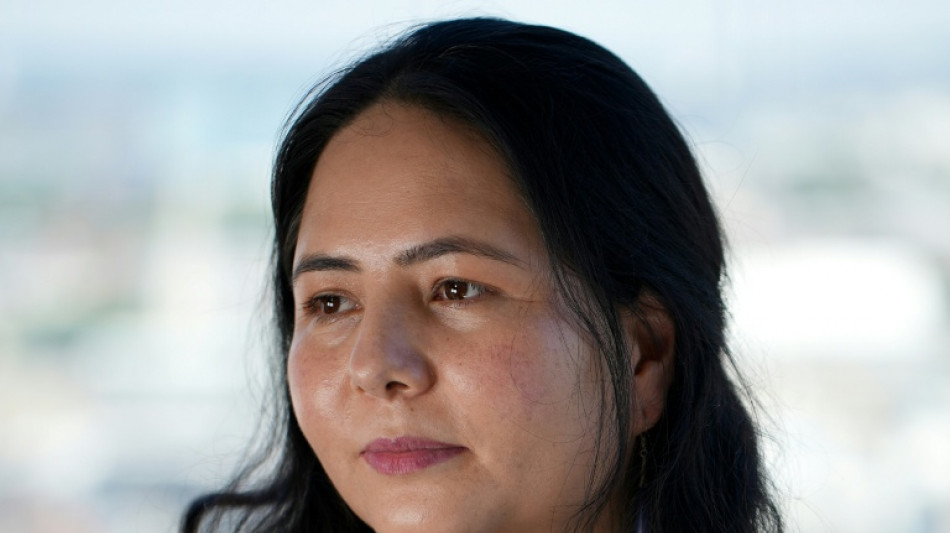
Afghanistan's women are "fighting alone" against discrimination by the Taliban authorities and feel abandoned by the world, Afghan journalist Zahra Joya told AFP.
"I lost everything in my country five years ago," she said in an interview in London.
The founder in 2020 of Rukhshana Media -- a news agency which aims to amplify the voices and stories of Afghan women -- the 34-year-old left Kabul in 2021 after the Taliban movement returned to power.
As the fifth anniversary of that day loomed, she has struggled to come to terms with how her homeland has changed.
"I really can't see or can't bear how (the) Taliban are celebrating our sorrow in Afghanistan. It is a heavy day and I wish strength and power to women and girls in Afghanistan."
Joya, from the Hazara ethnic minority -- historically one of the most discriminated groups in Afghanistan -- recalled the shock of August 15, 2021, remembering "a scary time" and "horrible moment".
The previous week, she had had lunch with a friend in a Kabul restaurant and walked around in the capital working as a journalist.
"Then the next week ... I was in prison in my house," she said, noting "the first thing" the Taliban government did for women was order them to stay home.
Joya had never imagined leaving her country, but shortly afterwards fled to Britain.
"From the Taliban perspective, everything -- every single thing -- about myself was wrong," she explained.
"My dignity, my identity as a woman, my gender, my career as a journalist, and also my ethnicity as a Hazara woman."
- 'Gender war' -
Joya spent some of her childhood living under the previous Taliban administration during which time girls' education was officially banned, before the hardline group which imposes its strict interpretation of Islam was ousted from power in 2001.
She nonetheless disguised herself as a boy to attend school, taking the boy's name Muhammad.
"The idea came to my mum," she recalled. "She made me a boy. She made boy clothes for me. She cut my hair and I went to school."
Following their 2021 return to power, Taliban authorities have closed high schools and universities to women and girls over the age of around 12, alongside imposing a series of rules on women's access to public life.
It is the only country in the world where girls' education is banned after primary school.
In Britain, Joya continues to work with journalists who have remained in Afghanistan, operating there in the utmost secrecy because of the personal security risks.
She recently collaborated with British newspaper The Guardian, asking Afghan women "what life "looks like on an ordinary day to you".
"We're surrounded by four walls," was the overwhelming response, Joya noted.
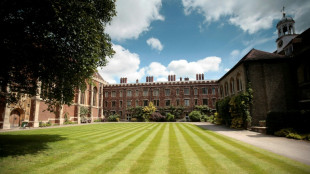
A by-fellow at the University of Cambridge, Zoya in July published a memoir, "The Vanishing Girl of Kabul" chronicling her life story and the fate of Afghan women.
"Afghan women are fighting alone," she told AFP.
"They are in a gender war. We need your solidarity," she urged the world.
"If there is any possibility to help us, share our stories, listen to us, and make your government accountable in terms of engagement with the Taliban."
B.Sharma--MT