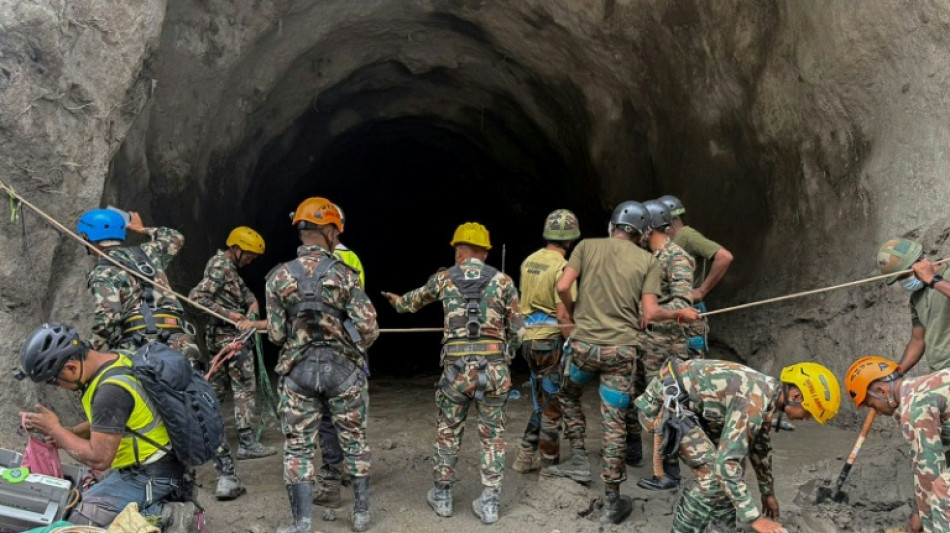
Nepal tunnel rescues face 'unprecedented' challenge / Photo: Handout - NEPAL ARMY/AFP/File

Nepal's flood disaster posed an unprecedented challenge, Australian rescue expert Arnold Dix said Monday, with multiple search operations underway in Himalayan hydropower tunnels.
The August 26 glacial and mountain collapse on the China-Nepal border killed at least 1,385 people, with more than 5,500 missing across the two countries.
Hundreds of hydropower workers are among the missing, with rescue efforts now in their thirteenth day.
"We are facing something I have never faced before," said Dix, president of the International Tunnelling and Underground Space Association, in a post on social media.
"Not one rescue, but multiple potential rescues, unfolding at the same time, in different places, each with its own dangers, uncertainties, and lives that may still be saved."
Nepal is holding a national day of mourning on Monday in line with traditional Hindu rituals.
But rescue efforts continue "with the same tempo we had on day one", Nepal Army spokesman Raja Ram Basnet told AFP on Monday.
"Our focus is on search and rescue at three levels -- on ground, by air, and in the tunnels. We are making sure that no one is still stranded."
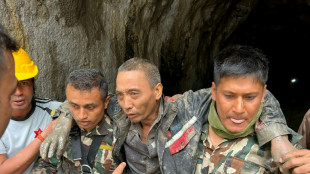
The rescue of three workers from deep inside tunnels -- two Nepalis on Friday and a Chinese man on Saturday -- buoyed hopes of finding other survivors.
Foreign experts, including from China, India, and South Korea, are aiding Nepali teams in rescue efforts -- among them Dix.
"We are measured not only by the lives we save, but by the lives we refuse to abandon," said Dix, a key adviser during the Indian rescue of 41 men trapped for 17 days inside the collapsed Silkyara tunnel in Uttarakhand state in 2023.
"Silkyara taught me never to confuse unlikely with impossible," he said.
X.Kapoor--MT