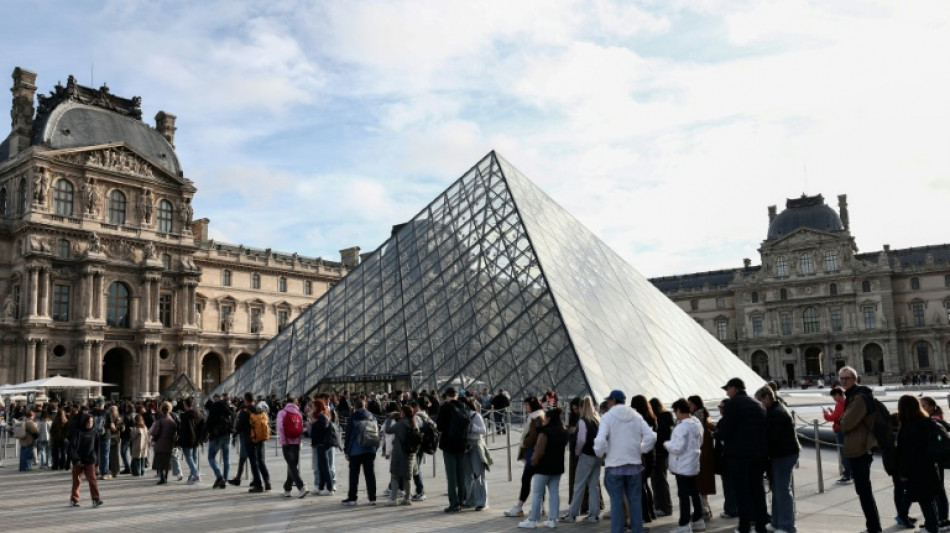
Louvre and other French museums fare hikes for non-European visitors / Photo: Thibaud MORITZ - AFP

France began charging non-EU visitors to the Louvre Museum 45 percent more than Europeans on Wednesday, in a controversial bid to raise money for renovations at the beleaguered Paris landmark.
The move is one of the boldest adoptions in Europe of so-called "dual pricing" at museums -- charging visitors different prices depending on their origins.
The practice is common in many developing countries, but until now was largely absent in Europe and has been criticised for being discriminatory and reducing access for some low-income foreign visitors to the home of the Mona Lisa.
Tourists who spoke to AFP on Wednesday had mixed reactions.
Kevin Flynn, an Australian in his 60s in Paris for a week with his wife, said the new 32-euro (37-dollar) tariff for non-Europeans was "acceptable".
"It’s the same price for many things in Italy, many things in Malta ... of such magnitude," he said.
But others, such as Joohwan Tak from South Korea, thought it was "unfair."
"We’re all human beings. It’s a big difference," he added.
"If I go to India, people from India pay less than people from abroad - it's fair because they have less money," added Marcia Branco from Brazil. "But because I'm in Paris and it's supposed to be a rich country I think it's not fair."
Other state-owned French cultural tourist hotspots are also hiking their fees for non-EU visitors, including the Versailles Palace, Chambord Palace in the Loire region and the national opera house in Paris.
The government has justified the increases on financial grounds, saying the change at the Louvre would raise 20-30 million euros annually for the museum which needs repairs and suffered a major robbery last October.
Trade unions at the Louvre have denounced the policy as "shocking philosophically, socially and on a human level" and have cited the change among complaints that have sparked recent strike action.
They argue that the museum's vast collection of around 500,000 items, including many from Egypt, the Middle East or Africa, hold universal human value.
While rejecting discriminatory pricing on principle, they are also worried for practical reasons, as staff will now need to check visitors' identity papers.
French academic Patrick Poncet has drawn a parallel between France's move and the "America First" policies of US President Donald Trump, whose administration hiked the cost for foreign tourists of visiting US National Parks by $100 on January 1.
The French policy was "symptomatic of the return, as elsewhere in the world, of unabashed nationalism", Poncet wrote in Le Monde newspaper last month.
It remains to be seen whether the break with European convention by the continent's most-visited country will spur other cultural destinations to follow suit.
Price discounts based on age are commonplace in Europe, with access for under-18s free at places such as the Acropolis in Athens, the Prado in Madrid or the Colosseum in Rome to encourage them to visit.
The Louvre remains free for minors from all countries and Europeans under 26.
T.Reddy--MT