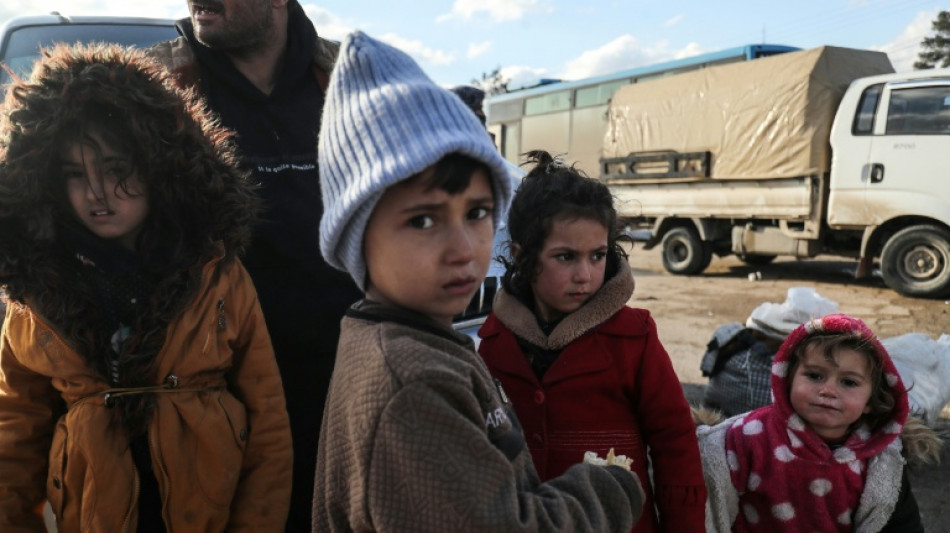
Talks between Damascus, Kurdish-led forces 'collapse': Kurdish official to AFP / Photo: Delil SOULEIMAN - AFP

Negotiations have collapsed between the Syrian president and the chief of the country's Kurdish-led forces, a Kurdish official told AFP, as the army deployed reinforcements to flashpoint areas in the north.
President Ahmed al-Sharaa and Mazloum Abdi, who heads the Kurdish-led Syrian Democratic Forces (SDF), were meeting to discuss a ceasefire agreement that included integrating the Kurds' administration into the state.
The agreement had marked a blow for the Kurds' long-held ambitions of preserving the de facto autonomy they had exercised in swathes of northern Syria for over a decade.
It came after rapid army gains in Kurdish-controlled territory, with Sharaa refusing to concede on a push for decentralisation even while pledging to protect the minority's rights.
"The negotiations held yesterday in Damascus between General Mazloum and Mr Al‑Sharaa have collapsed entirely," Kurdish official Abdel Karim Omar told AFP, blaming the central government for the breakdown.
"Their sole demand is unconditional surrender. A firm and decisive stance from the international community is urgently required," he added.
Syria's Kurds carved out a de facto autonomous region under their control in the north of the country at the height of its civil war.
Sharaa, who is backed by the United States and Turkey, has refused to entertain the idea of decentralisation or federal rule, and insisted the army must deploy across Syria.
Sharaa had on Monday discussed with US President Donald Trump the Kurdish question, according to the Syrian presidency.
In the phone call, they "emphasised the need to guarantee the Kurdish people's rights and protection within the framework of the Syrian state", the Syrian presidency said.
They "affirmed the importance of preserving the unity and independence of Syrian territory" and discussed "cooperation on combating" the Islamic State jihadist group, it added.
Despite the ceasefire between the two sides, brief clashes erupted on Monday in Raqa city in northern Syria, with an AFP correspondent hearing heavy bombardment.
Raqa was once the Islamic State group's de facto capital in Syria.
On Tuesday, the AFP correspondent in Raqa saw a large convoy of armoured vehicles and vehicles carrying soldiers heading towards the city of Hasakeh, a Kurdish bastion that is also home to a sizeable Arab population.
Meanwhile, the SDF was calling for "young Kurds, men and women" both within and outside Syria to "join the ranks of the resistance".
In Hasakeh, an AFP journalist saw dozens of civilians, including women and elderly people, carrying arms and manning checkpoints as they heeded the SDF's call to defend.
- 'Stability and a normal life' -
Sunday's ceasefire deal included the Kurds' handover of Arab-majority Deir Ezzor and Raqa provinces, which they administered after their US-backed defeat of IS at the height of Syria's civil war.
Under the agreement, Damascus also took responsibility for IS prisoners and their families held in Kurdish-run jails and camps.
In Deir Ezzor province, teacher Safia Keddo, 49, said that "we're not asking for a miracle, we just want stability and a normal life".
In Raqa, the AFP journalist said residents toppled a statue of a woman erected by Kurdish forces.
Raqa resident Khaled al-Afnan, 34, said "we support Kurdish civil rights... but we don't support them having a military role".
Turkey warned Tuesday it would not tolerate any "provocations" over the events in Syria as its Kurdish community called for protests.
Outlawed Kurdish militants in Turkey meanwhile said they would "never abandon" the Kurds in Syria, a leader of the PKK armed group said, quoted by the Firat news agency.
- 'Years of hope' -
On Sunday, the SDF withdrew from areas under its control including the Al-Omar oil field, the country's largest, and the Tanak field.
Local fighters from tribes in the Arab-majority Deir Ezzor province sided with Damascus and seized the areas before the arrival of government forces.
Some Arab tribes were previously allied with the SDF, which included a significant Arab component.
Mutlu Civiroglu, a Washington-based analyst and expert on the Kurds, said the government's advance had raised "serious doubts about the durability" of the ceasefire and a March agreement between the government and the Kurds.
Sharaa had on Friday issued a decree granting the Kurds official recognition, but the Kurds said it fell short of their expectations.
In Qamishli, the main Kurdish city in the country's northeast, activist Hevi Ahmed, 40, said Sunday's deal was "a disappointment after years of hope that the Syrian constitution might contain a better future for the Kurds".
N.Bhat--MT