Venezuela moves to open up oil sector, a key Trump demand / Photo: Ronaldo SCHEMIDT - AFP

Venezuelan lawmakers on Thursday gave their initial backing to plans to throw open the oil sector to private investors, paving the way for the return of US energy majors -- a key demand of President Donald Trump.
Less than three weeks after the US ouster of Nicolas Maduro, MPs endorsed on first reading a bill allowing private companies to independently engage in oil exploration and extraction.
If adopted on a second reading, the bill would roll back decades of state controls over Venezuela's oil sector, which were tightened by Maduro's late mentor, socialist firebrand Hugo Chavez, in the mid-2000s.
The bill has been promoted by Maduro's former deputy, acting president Delcy Rodriguez, who has overseen a lightning-fast thaw in ties with Washington since taking the helm.
In another sign of the speed of the changes unfolding in Caracas, the United States confirmed Thursday it had named a new head for its mission in Venezuela.
The US embassy page listed Laura F. Dogu -- a former ambassador to Nicaragua and Honduras -- as the new charge d'affaires to Venezuela, in what was seen as another step towards the restoration of full diplomatic ties.
- Warming relations -
Caracas and Washington severed relations after Maduro's widely disputed claim to reelection in 2019.
The US embassy has been mostly deserted since then.
Within days of Maduro's January 3 capture in Caracas, US diplomats travelled to the Venezuelan capital to discuss reopening the embassy.
Dogu will work from Bogota in neighboring Colombia until the mission is operational.
Trump has boasted that he is working "really well" with Rodriguez, who was vice president in Maduro's rabidly anti-US government.
On Wednesday a senior US official said Rodriguez would soon visit the United States, despite still being under US sanctions.
Maduro was toppled after a months-long US pressure campaign and flown to New York with his wife to face trial on drug trafficking charges.
Trump claims Washington now effectively runs Venezuela and controls its oil industry.
Rodriguez has appeared ready to comply so far.
- Dollar influx -
This week she ploughed $300 million from a US-brokered oil sale into propping up the ailing national currency, the bolivar.
The mere anticipation of the injection drove down the price of dollars, the currency in which many Venezuelans conduct their business.
But economists warned that true relief from spiralling prices would require a sustained influx of dollars -- which in turns requires foreign investment.
Venezuela has the world's largest proven reserves of oil.
The energy reform bill before parliament ends a Chavez-era requirement for private companies to form joint ventures with state-owned oil firm PDVSA, which insisted on holding a majority.
The law also makes the royalties regime more flexible, based on the success of the oil exploration project.
Rodriguez was petroleum minister under Maduro, a position she still holds.
To win the support of both Venezuelans and Washington, she needs to quickly show improvements in the economy and signal an end to a decade of worsening repression under Maduro.
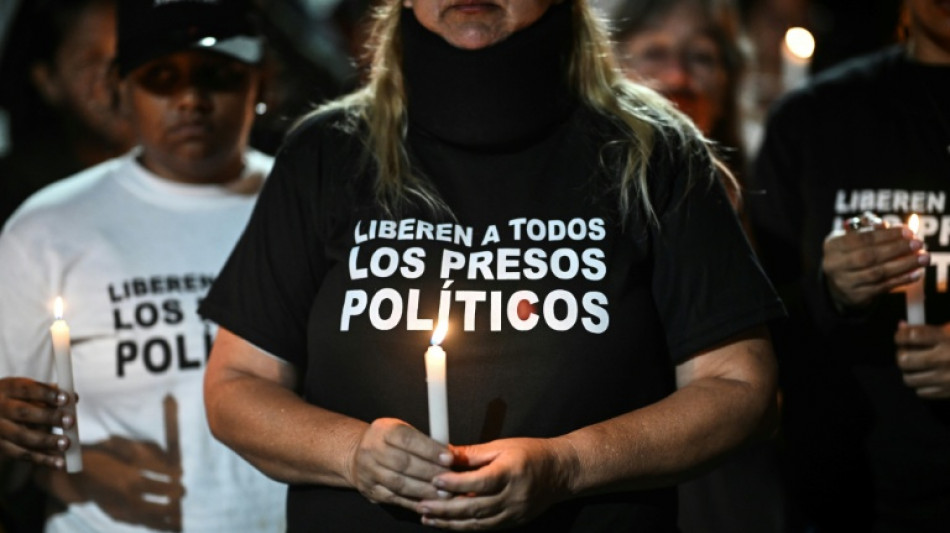
In the past two weeks, her government has slowly freed dozens of political prisoners from the hundreds behind bars.
On Thursday, authorities released the son-in-law of opposition figure Edmundo Gonzalez Urrutia, who was serving a 30-year sentence on terrorism charges.
Gonzalez Urrutia, in exile in Spain, is widely considered the rightful winner of Venezuela's 2024 presidential election, which Maduro professed to win.
His son-in-law Rafael Tudares was arrested by masked men in January 2025 while on his way to school with his two children.
Since Maduro's ouster Trump has ramped up pressure on another Latin American arch-foe, communist Cuba, a longtime Venezuela ally.
Trump has vowed to cut off all oil supplies to Cuba, which has relied for years on heavily-subsidized Venezuelan oil and cash to remain afloat.
Cuban President Miguel Diaz-Canel said Thursday he spoke by telephone with Rodriguez to express his "support and solidarity."
O.Sethi--MT