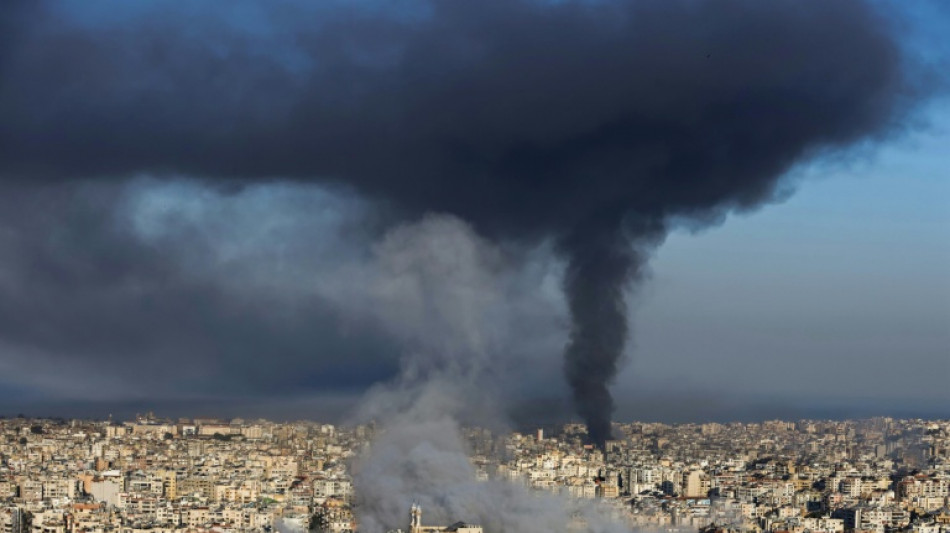
Iran targets Mideast energy industry and US missions / Photo: IBRAHIM AMRO - AFP

Drones hit the US embassy in Riyadh and more explosions rang out in Gulf cities Tuesday as Iran hit back at industrial and diplomatic targets across the Middle East and governments sought to evacuate their nationals from the region.
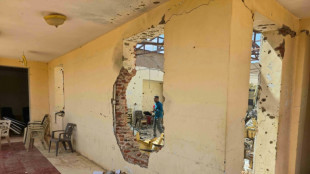
Four days after US and Israeli strikes killed Iran's supreme leader and triggered a regional war that has seen missile and drone strikes across the Gulf and beyond, AFP reporters in the Saudi capital saw smoke damage on the walls and roof of the American embassy.
Saudi police were swarming the diplomatic quarter and checking the IDs of everyone who entered. Several roads were blocked, including those to the US embassy. The Saudi foreign ministry described the attack as "heinous and unjustified".
AFP journalists in the Bahraini and Qatari capitals heard more explosions and sirens, and the Iranian armed forces announced they had launched strikes on targets in Israel and on the major US air base in Al-Udeid, Qatar. Qatar said it had thwarted attacks on its airport.
Iran's Revolutionary Guards spokesman Ali Mohammad Naini meanwhile warned that "the gates of hell will open more and more, moment by moment, upon the United States and Israel".
United Nations rights chief Volker Turk said he was "deeply shocked" by how the war's toll on civilians, and the UN nuclear watchdog said Iran's Natanz enrichment plant appeared in satellite imagery to have suffered "recent damage".
Powerful explosions also shook Tehran through the night, as fighter jets flew over the Iranian capital and US President Donald Trump threatened to escalate the conflict.
On Monday, the US State Department had urged "Americans to DEPART NOW" from all of the countries and territories of the Middle East "due to serious safety risks".
Israel, meanwhile, said it was seizing new forward positions inside southern Lebanon, after Hezbollah fired missiles in support of its backer Iran, provoking a furious Israeli bombardment.
Defence Minister Israel Katz said Israeli forces had been authorised "to advance and take control of additional strategic positions in Lebanon in order to prevent attacks on Israeli border communities".
Shortly afterwards, the military spokesman said: "In practice, Northern Command has moved forward... and is creating a buffer, as we promised, between our residents and any threat."
A Lebanese army source said Israeli forces had advanced from around Kfar Kila, in an apparent attempt "to establish a broad security belt in south Lebanon".
- 'Burn any ship' -
According to a Lebanese military source, following Israel's "escalation", the Lebanese army redeployed troops posted near the southern border back to their bases. Hezbollah said it had launched strikes targeting three Israeli bases.
A spokesman for the UN refugee agency said 30,000 Lebanese had been driven from their homes and registered at collective shelters, while "many more slept in their cars on the side of roads".
In Gulf cities and the Omani port of Duqm, Iranian strikes continued to hit oil and gas infrastructure, sending shares plunging as European markets opened, with oil and gas prices surging for the second day running.
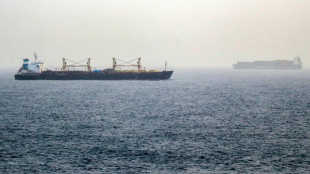
"We will burn any ship that tries to pass through the Strait of Hormuz," Revolutionary Guards General Sardar Jabbari declared.
Trump warned that the strikes could continue for weeks or months.
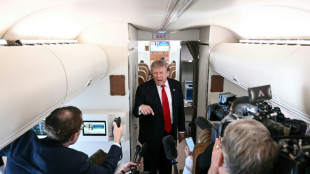
"From the beginning we projected four to five weeks, but we have capability to go far longer than that," Trump said at the White House.
In an earlier interview with the New York Post, Trump -- who campaigned on promises to end US involvement in wars -- refused to rule out deploying US ground troops to Iran "if they were necessary".
Speaking to NewsNation, he warned Iran would "find out soon" how he planned to retaliate for the Riyadh embassy attack.
The US president laid out the operation's objectives -- destroying Iran's missiles, navy and nuclear programme and stopping its support for armed groups across the region.
Trump's goals notably did not include toppling the Islamic republic, even though he and Israel's Prime Minister Benjamin Netanyahu have urged the people of Iran to rise up.
- Energy production stalls -
Saudi Arabia said it intercepted on Tuesday eight more drones in two cities, including the capital.
Two, however, got through air defences and struck the US embassy, causing a fire.
In Fujairah, one of the United Arab Emirates, debris from downed drones caused a fire at an oil facility, the state's media office said. The blaze was brought under control and operations resumed.
Qatar has already halted LNG production, sending European energy prices soaring, and on Tuesday giant gas producer QatarEnergy announced a halt in production of related products like urea, polymers, methanol and aluminium.
US Secretary of State Marco Rubio presented a strikingly new narrative of how the conflict started.
Washington's top diplomat said the United States, which had built up its forces in the Gulf to levels not seen since its 2003 Iraq invasion, attacked only after learning that ally Israel was to strike Iran.
Iran had been ready to strike US forces in the region in response to Israel, so Trump decided to intervene "pre-emptively" alongside Israel, Rubio said.
Throughout the region, the death toll has steadily increased, with six US military personnel killed so far in the war, according to US Central Command.
Iranian media have reported hundreds of Iranian casualties, including scores at a girl's school, although AFP reporters have not been able to verify tolls independently.
The US-based Human Rights Activists News Agency (HRANA) on Tuesday said there were 101 casualties inside Iran on the third day of the war, including "85 civilian deaths and 11 military personnel killed".
burs/dc/jsa
H.Kaur--MT