Pakistan says growing support for its Mideast war talks plan / Photo: - - Pakistan Foreign Ministry/AFP

Pakistan said on Sunday that it was ready to broker and host "meaningful talks" between the United States and Iran to bring an end to their war, outlining growing support for its peace efforts, including from the United Nations and China.
The government in Islamabad has emerged as a key facilitator, relaying messages between the two sides to try to stop the conflict from escalating.
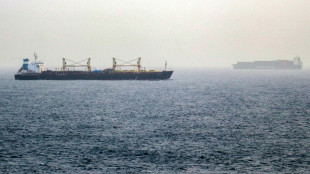
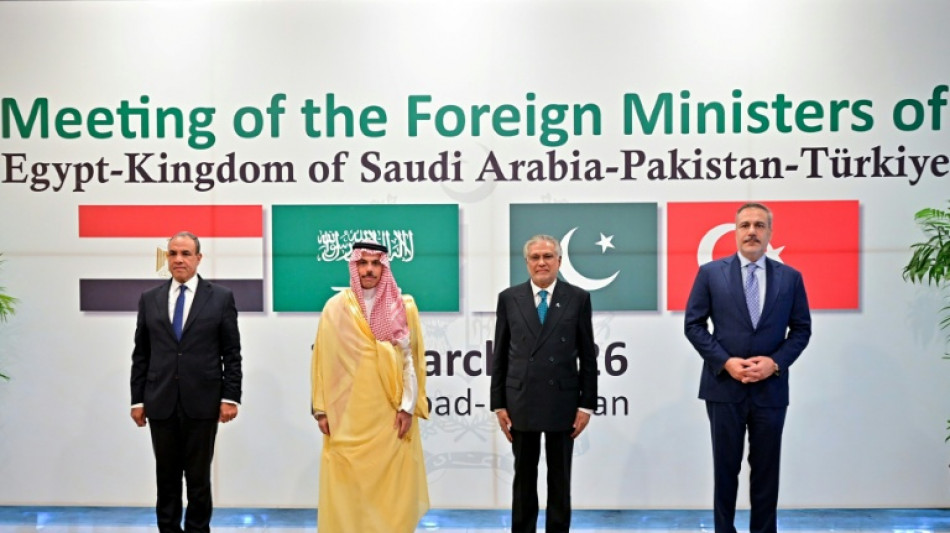
Foreign Minister Ishaq Dar hosted his counterparts from Saudi Arabia, Egypt and Turkey for several hours in the Pakistani capital on Sunday, with concern high about the impact of the fighting, including the choking of maritime traffic through the strategic Strait of Hormuz.
In a televised statement, Dar, who is also Pakistan's deputy prime minister, said the visitors "expressed their full support" for potential US-Iran talks in Islamabad.
"The foreign ministers advocated dialogue and diplomacy as the only viable pathway to prevent conflicts and to promote regional peace and harmony," he added.
Pakistan is seeking to capitalise on its longstanding links with Tehran and close contacts in the Gulf, as well as the personal rapport that Prime Minister Shehbaz Sharif and the country's powerful army chief, Field Marshal Asim Munir, have struck up with US President Donald Trump.
Dar and Sharif have held several calls with senior government ministers in Iran, including President Masoud Pezeshkian and Foreign Minister Abbas Araghchi, and were "actively engaged" with the US administration, the foreign minister said.
"In this context, Pakistan is very happy that both Iran and the US have expressed their confidence in Pakistan to facilitate the talks," he added.
"Pakistan will be honoured to host and facilitate meaningful talks between the two sides in coming days, for a comprehensive and lasting settlement of the ongoing conflict."
Dar has spoken to his Chinese counterpart Wang Yi and UN Secretary-General Antonio Guterres. They "fully support" Pakistan's push for peace, as do other governments around the world, he added.
- 'Event planner' -
Sunday's talks, held under tight security and with no US, Israeli or Iranian representation, addressed efforts to stop the conflict from spreading and to encourage "a negotiations track" between Tehran and Washington to prevent the region "slipping into a state of complete chaos", Cairo said.
All three visiting ministers -- Badr Abdelatty from Egypt, Hakan Fidan from Turkey, and Saudi Arabia's Faisal bin Farhan -- also met Sharif as well as Munir.
Tehran has refused to admit to holding official talks with Washington but has passed a response to Trump's 15-point plan to end the war via Islamabad, Iran's Tasnim news agency has reported.
Germany's Foreign Minister Johann Wadephul said on Friday he expected a direct US-Iran meeting in Pakistan "very soon".
But Shuja Nawaz, founder director of the South Asia Center at the Atlantic Council, said Pakistan had taken on a "challenging task" in trying to get Washington and Tehran to the table.
"It could only do this with Saudi blessing," Nawaz, author of "The Battle for Pakistan: The Bitter US Friendship and a Tough Neighbourhood", told AFP.
"The real challenge for Pakistan is to bring together a single person in the White House who changes his mind frequently and an Iranian government that is debating whether to fight a long war or find an end to its economy being further devastated.
"Israeli autonomous decision-making will further complicate any Trump decision to claim victory and end a conflict that is hurting his popularity at home. Pakistan has limited leverage over both the US and Iran; none with Israel.
"Will it remain an event planner only?"
Pakistan's efforts make economic sense: it relies on oil and gas imports through the Strait of Hormuz. Continued disruption to shipping could worsen fuel supplies, driving up prices and forcing further austerity measures.
Dar said late on Saturday that Iran had allowed 20 more Pakistani-flagged vessels -- or two ships daily -- to pass through the Strait.
P.Prasad--MT