Strikes knock out power in Tehran, Iran says US plotting ground invasion
Airstrikes knocked out electricity to parts of Tehran and its surroundings on Sunday as a top Iranian official accused the United States of plotting a ground invasion despite publicly pushing for a negotiated deal.
Pakistan said meanwhile that it was ready to broker and host "meaningful talks" between Washington and Tehran to bring an end to the month-old US-Israeli war against Iran.
The Israeli parliament was set to vote overnight on a 2026 budget that provides for a massive rise in military spending, increasing the defense budget by more than $10 billion to over $45 billion.
In addition to fighting the war against Iran with its US ally since February 28, Israel is also battling in southern Lebanon against Iran-backed Hezbollah.
Iran's energy ministry reported power outages in the capital, its surrounding region and Alborz province "following attacks on electricity industry facilities" and said the authorites were working to "resolve the problem."
US President Donald Trump has previously threatened to strike Iranian power stations if Tehran does not negotiate a peace deal, before repeatedly extending a deadline to do so.
Iranian parliamentary speaker Mohammad Bagher Ghalibaf warned on Sunday after a US warship with another 3,500 military personnel arrived in the Middle East that any US ground invasion of the country would be repelled.
"The enemy publicly sends messages of negotiation and dialogue while secretly planning a ground attack," Ghalibaf said in a statement carried by the official IRNA news agency.
"Our men are waiting for the arrival of the American soldiers on the ground to set them on fire and punish their regional allies once and for all," he added.
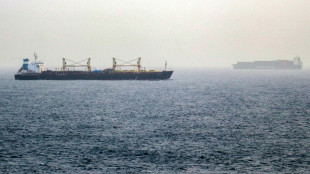
The war has escalated into a regional conflagration as Iran has retaliated with attacks on Gulf states and shut down the critical Strait of Hormuz oil shipping lane, sending energy markets into a tailspin and threatening the world economy.
Ghalibaf called for unity among Iranians, saying the war was "at its most critical stage."
- 'Uncertain future' -
Weeks of unrelenting strikes have taken a heavy toll on ordinary people in the country.
"I miss a peaceful night's sleep," an artist in Tehran told AFP, saying night-time strikes were "so intense it felt like all of Tehran was shaking."
Farzaneh, a 62-year-old woman in Iran's western city of Ahvaz contacted by AFP from Paris, said: "People wake up each day worried about an uncertain future."
A university in Iran's central city of Isfahan said it was hit by airstrikes on Sunday for the second time since the war erupted.
In Tehran, the Qatari news channel Al Araby said an Israeli missile hit the building housing its office.
On the diplomatic front, Pakistan, acting as a go-between for Washington and Tehran, hosted foreign ministers from Saudi Arabia, Turkey and Egypt in Islamabad for talks on the crisis.
Trump has repeatedly spoken of diplomatic contacts with Iran, although these claims have been denied by Tehran.
Pakistani Foreign Minister Ishaq Dar said the visiting diplomats had discussed how to "bring an early and permanent end to the war" and there was a growing consensus behind Islamabad hosting peace talks.
He said Iran and the United States had expressed "confidence in Pakistan to facilitate the talks" and that he had spoken to his Chinese counterpart Wang Yi as well as UN Secretary-General Antonio Guterres and other foreign ministers who also backed the idea.
Despite making diplomatic overtures including proposing a 15-point plan to end the war, the United States has also been sending more military assets into the region.
The USS Tripoli, an amphibious assault ship carrying around 3,500 Marines and sailors, arrived in the Middle East on Friday.
According to The Washington Post, the Pentagon was preparing plans for weeks of ground operations -- potentially including raids on sites near the Strait of Hormuz -- though Trump has yet to approve any deployment.
Iran says it has closed the Strait of Hormuz, which previously accounted for a quarter of the world's seaborne oil trade and a fifth of liquefied natural gas shipments, to vessels from hostile nations.
- Aluminium plans targeted -
On another front, Israeli attacks have continued in Lebanon, which was drawn into the war when Hezbollah fired rockets at Israel on March 2.
The Lebanese health ministry said on Sunday that the death toll from Israeli strikes had surpassed 1,200.
Hundreds of mourners attended the funeral near Beirut on Sunday of three journalists killed by the Israeli military in southern Lebanon on Saturday.
In the Gulf, Iranian forces said they had fired a volley of missiles and drones at plants belonging to two of the world's largest aluminium producers in Bahrain and the United Arab Emirates, targeting what they described as industries linked to the US military.
Emirates Global Aluminium said an Iranian attack wounded six and caused significant damage to its plant, while Bahraini state media said two Aluminium Bahrain employees were injured.
In Kuwait, the defence ministry said 10 service members were injured in an attack on a military camp and 14 ballistic missiles and 12 hostile drones were detected in Kuwaiti airspace in the past 24 hours.
In Israel, thick black smoke could be seen rising from an industrial complex in the Negev desert in images released by the Israel Fire and Rescue Authority. The military said the impact may have been caused by missile shrapnel.
burs/cl/jgc
N.Prakash--MT