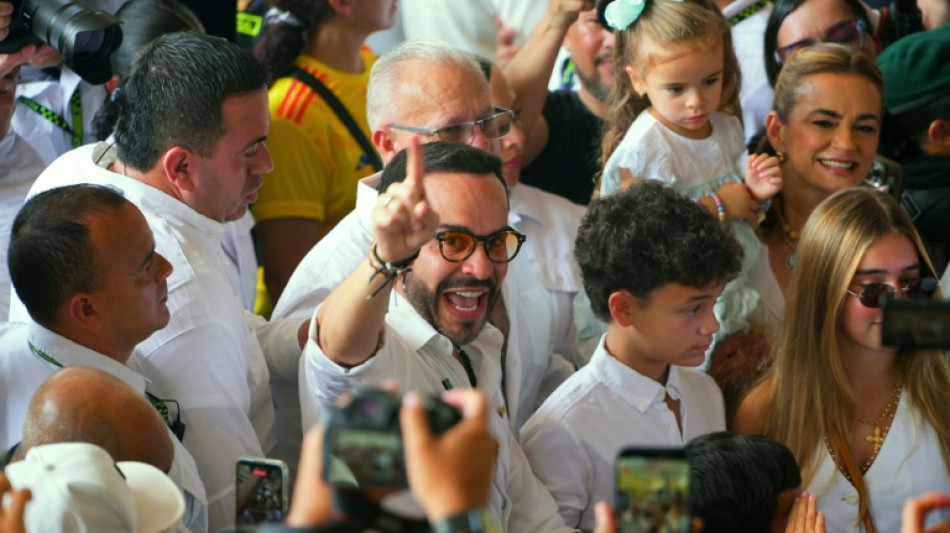
Trump fan, leftist through to Colombia presidential runoff / Photo: Vanessa ROMERO - AFP

Colombia's first-round presidential vote Sunday triggered a runoff between a hard‑right pro-Trump showman and a leftist philosopher-turned-senator, after the bloodiest campaign in over a decade.
The electoral authority said rightwing hopeful Abelardo de la Espriella had won 44 percent of the vote, besting leftist Ivan Cepeda with 41 percent and a string of other candidates who trailed far behind.
It was a stronger-than-expected showing for 47-year-old De la Espriella -- a pro‑Trump businessman-come-lawyer-and-singer who calls himself "The Tiger" and has billed himself as a political outsider.
He campaigned behind bullet‑proof glass and vowed a "shock plan" to confront armed groups in the air, on land and at sea, mimicking iron-fist talk that has swept the right to power across Latin America.
"We'll start immediately with the bombing of narco-terrorist camps," he told AFP in an interview during the campaign.
It was a message that appears to have resonated with voters rattled by a spate of car bombs, drone attacks and the assassination of a leading presidential candidate.
But De la Espriella failed to garner the 50 percent needed to avoid a June 21 runoff.
He will now face Cepeda, who has vowed to continue efforts to negotiate peace with dissident armed groups that dominate global cocaine production.
In the decade since a landmark peace accord was signed with the once powerful FARC rebel army, Colombia has thrived. But pockets of the country are still under the grip of armed groups vying for control of cocaine routes, illegal gold mining and extortion.
Outgoing President Gustavo Petro championed a "total peace" strategy of negotiating with guerrillas and other such drug‑trafficking groups.
Critics say Petro's strategy has given criminal groups free rein, fueling violence and record cocaine exports.
"This government really strengthened armed groups by being so soft," said Catalina Devia, a 42‑year‑old advertising executive and mother of two who voted for De la Espriella.
"Many Colombians are thinking about emigrating," she said.
Cepeda, 63, is the son of a leftist senator killed by right‑wing paramilitaries.
He is backed by President Petro, who is constitutionally barred from re‑election, and draws support from voters who credit the government with helping the poor.
Supporters point to higher minimum wages, increased education spending and land transfers to poor communities.
There was disappointment among Cepeda supporters that he came in second.
"It leaves a bad taste" said 42-year-old cafe worker Andres Alba. "It's not anger, but it does leave a bad taste."
Gloria Terranova, a 59-year-old coffee shop owner, said she held out hope that Cepeda might still win the presidency despite finishing second in the first round.
"Right now we are at radical extremes: one side wants peace, the other wants war," she said.
But some voters expressed unease with the stark and polarized choice they now face.
"My vote is not guided by what I want, but what I fear the most," said Julian, a 37‑year‑old project manager. "I'm going to vote for the less worse candidate."
Despite worsening violence in rebel‑held areas, election day itself passed calmly.
Authorities deployed more than 400,000 police and soldiers nationwide to protect polling stations.
Whoever replaces Petro will face a web of armed groups engaged in drug trafficking, illegal mining and extortion.
C.Gupta--MT