US, Iran clash, putting fragile deal under growing strain / Photo: ibrahim AMRO - AFP

A fragile truce between the United States and Iran hung in the balance Saturday after US forces said they struck Iranian targets in another tit-for-tat response to attacks on shipping in the vital Strait of Hormuz.
The clashes brought new tension to the negotiating process meant to end a war launched by the United States and Israel at the end of February. They also underlined the risks still facing one of the world's most important sea lanes for oil and other commodities.
US Central Command, or CENTCOM, said it hit "multiple targets in Iran."
This, CENTCOM said, was in response to an Iranian drone attack on the Panama-flagged oil tanker "Kiku," which was carrying some two million barrels of crude.
The US military said the latest response targeted "surveillance infrastructure, communication systems, air defense sites, drone storage facilities, and minelayer capabilities."
Iranian media reported several explosions in Sirik and Qeshm areas, in southern Iran.
On Friday, the United States also conducted strikes that it said it were in response to another Iranian attack on a ship, the "Ever Lovely."
Iran said Saturday it had hit US targets in the Gulf in its own retaliation.
Bahrain said it was targeted by several Iranian drones early on Saturday and accused Tehran of "sabotaging peace efforts."
Iran's Revolutionary Guards said "if the aggression is repeated, our response will be broader."
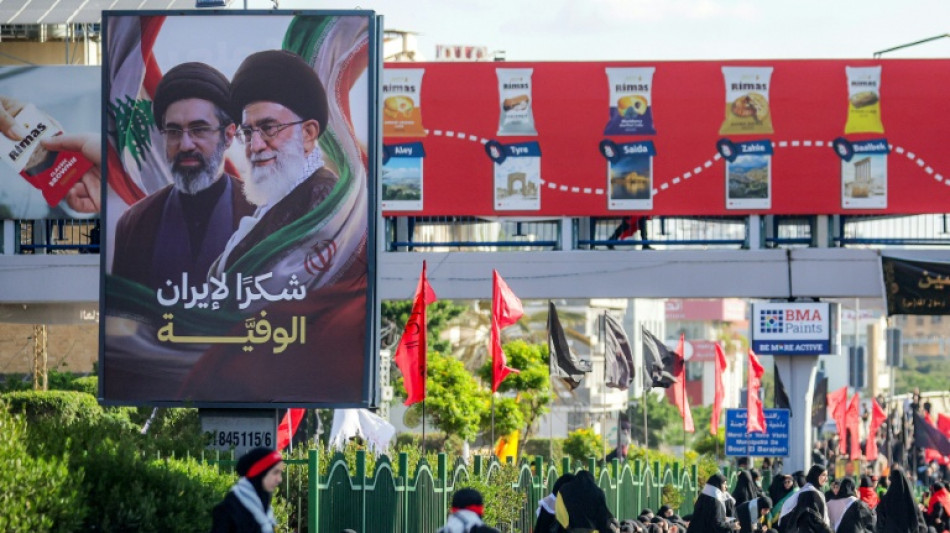
Israel, meanwhile, launched strikes in Lebanon and Hezbollah's leader Naim Qassem rejected a deal to end that conflict, which has also threatened to derail the wider US-Iran peace effort.
Iran called "these brutal attacks... a blatant violation" of the interim truce deal.
- Shipping lanes under fire -
The flare-ups in violence highlighted ongoing wrangling over control of the Hormuz strait.
Iran has warned vessels not to enter or leave the Gulf through the strait without permission, but ships have continued to move, some using a route not authorised by Tehran.
H.A. Hellyer, of London think tank the Royal United Services Institute, said "Iran is likely to continue calibrated, low-level coercive activity in and around the Strait of Hormuz... to create persistent pressure on international shipping without triggering a wider conflict".
He said November's US midterm elections for Congress give Washington "incentives for a quicker agreement" while, for Iran, "a drawn-out negotiation accompanied by controlled pressure in the strait can work to its advantage."
Despite the latest flare-up, oil prices have fallen sharply on hopes that traffic through Hormuz -- through which in peacetime around a fifth of the world's oil and liquefied natural gas exports travel -- would continue to recover.
The economic impact on Iran remains unclear, but on Saturday the country's statistics agency said that year-on-year inflation had hit 88.6 percent, up from 68 percent in February.
- Lebanon threats -
Lebanon was drawn into the Middle East war in early March, when militant group Hezbollah launched rockets at Israel in support of Iran. That provoked an Israeli invasion and fighting that has also undermined the US-Iran ceasefire.
On Friday, Israel and Lebanon signed an agreement supported by the US aimed at securing long-term peace between the two countries.
But on Saturday, Hezbollah's chief Qassem rejected the deal. He called it "humiliating, shameful and a surrender of sovereignty" and labelled it "null and void."
He instead called for the full implementation of Washington's deal with Tehran, which includes an end to the fighting in Lebanon.
Hezbollah has repeatedly called for a full Israeli withdrawal from southern Lebanon, but the Washington deal does not appear to provide for that.
Israeli Prime Minister Benjamin Netanyahu has insisted Israeli troops will remain in the so-called security zone they occupy in southern Lebanon, with civilians prevented from returning until Hezbollah is disarmed.
On Saturday, the Israeli premier called the deal historic and "a blow to Iran and Hezbollah".
He asserted that both the United States and Lebanon "have recognised Israel's right to maintain a security zone inside Lebanon for as long as it remains necessary to safeguard our security."
The agreement is not universally popular in Israel. Netanyahu's far-right security minister Itamar Ben Gvir denounced it as "a big mistake" and insisted that only Israeli forces were capable of disarming Hezbollah.
Earlier Saturday, Defence Minister Israel Katz said he had told the country's troops "to prepare for an extended stay in the security zone".
Meanwhile, the Israeli military said it carried out an airstrike on Saturday targeting suspected militants in the south -- the first such attack since Washington announced the framework agreement between the two countries.
Lebanon's National News Agency then reported early Saturday evening that Israel had carried out fresh strikes in the south of the country.
The health ministry later reported at least one killed and two wounded in an Israeli airstrike on Nabatieh al-Fawqa.
burs-sms/ksb
M.Shukla--MT