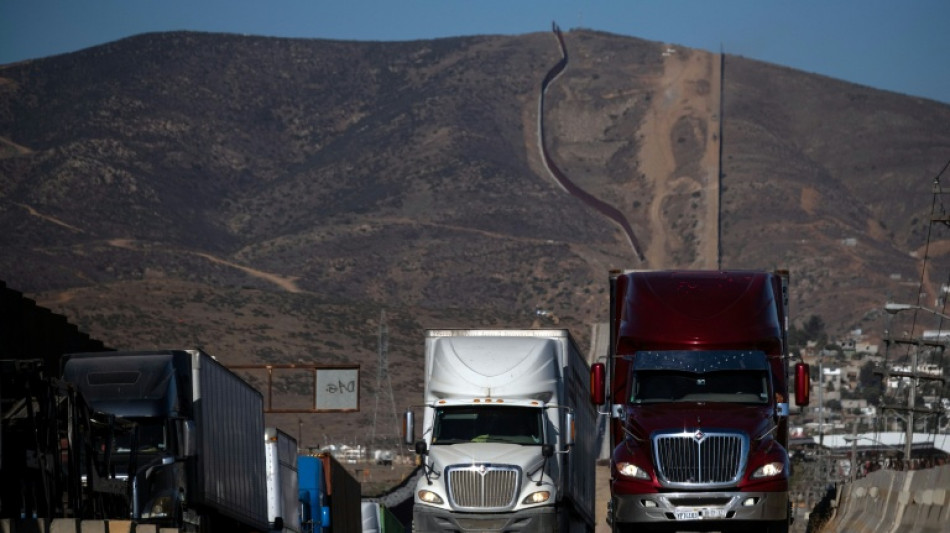
US refuses to extend North America trade pact in current form / Photo: Guillermo Arias - AFP/File

The United States will not renew a North American trade pact with Canada and Mexico in its current state, the US trade envoy said Wednesday, meaning the deal will now be reviewed annually.
The move is likely to fuel uncertainty for businesses in North America, given deep integration across supply chains in sectors like automobiles.
But the US-Mexico-Canada Agreement (USMCA) remains in force for another 10 years even if not renewed by Wednesday's deadline.
The free trade pact will instead be subject to annual reviews, unless a country decides to withdraw entirely.
"The United States did not agree to renew the USMCA in its current form. As a result, the USMCA is not renewed," US Trade Representative Jamieson Greer said in a statement.
"The United States will continue to engage with Mexico and Canada to address the agreement's shortcomings and our trade deficits with these countries," he added.
A senior US official told reporters Wednesday that US trade gaps were a key concern, alongside market access opportunities in Canada and Mexico. The official flagged tensions in areas like dairy and corn.
Mexico's economy secretary, Marcelo Ebrard, confirmed the impasse.
On Wednesday, the USTR held a virtual meeting with Ebrard and Ottawa's minister in charge of Canada-US trade, Dominic LeBlanc.
The Trump administration's decision not to extend the pact was widely expected.
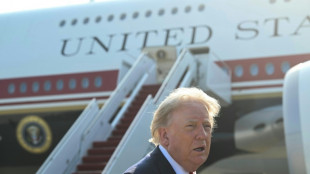
President Donald Trump said in June that he was not "looking to renew" the agreement despite signing and praising it in his first term.
Canada and Mexico had both called for a 16-year renewal of the USMCA.
With the deal being subject to rolling negotiations instead of a longer term extension, talks could last for months or years over everything from tariffs to trade rules governing specific sectors.
- Ticking clock -
Despite a 10-year countdown to the deal's expiration, the senior US official said countries need not wait a decade to conclude their agreement.
"I think we need to come to a conclusion quickly, if possible," the official added.
Analysts say the development does not change day-to-day trade between the countries for now.
But Scott Lincicome of the libertarian Cato Institute told AFP that uncertainty could dampen business investment.
Still, he expects the USMCA to survive, with goods and services trade within North America amounting to nearly $2 trillion in 2024.
Even as Trump unleashed tariffs on virtually all trading partners in his second presidency, he made critical exemptions for USMCA products.
American Automotive Policy Council president Matt Blunt stressed Wednesday that "North American economic integration enables enormous competitive benefits for the region."
But Brian Bryant of the International Association of Machinists and Aerospace Workers union said the USMCA "should not simply be extended as-is."
He urged for tougher labor standards and "meaningful measures that discourage corporations from moving jobs out of the United States and Canada in pursuit of cheaper labor."
The United States and Mexico have held two rounds of bilateral trade talks and are due to hold a third in the week of July 20.
Mexico has been seeking to reduce US tariffs on steel, aluminum and autos after Trump slapped sharp duties on steel, aluminum and copper imports.
While Greer did not unveil a schedule for formal talks with Canada, he has met with LeBlanc.
The USMCA was implemented in 2020, replacing NAFTA, the North American Free Trade Agreement that took effect in 1994.
It helped lower or remove tariffs and other trade barriers on many products traded between the three nations.
Q.Kulkarni--MT