Defence and minerals: inside Pakistan's lobbying push in Washington / Photo: Jacquelyn MARTIN - POOL/AFP

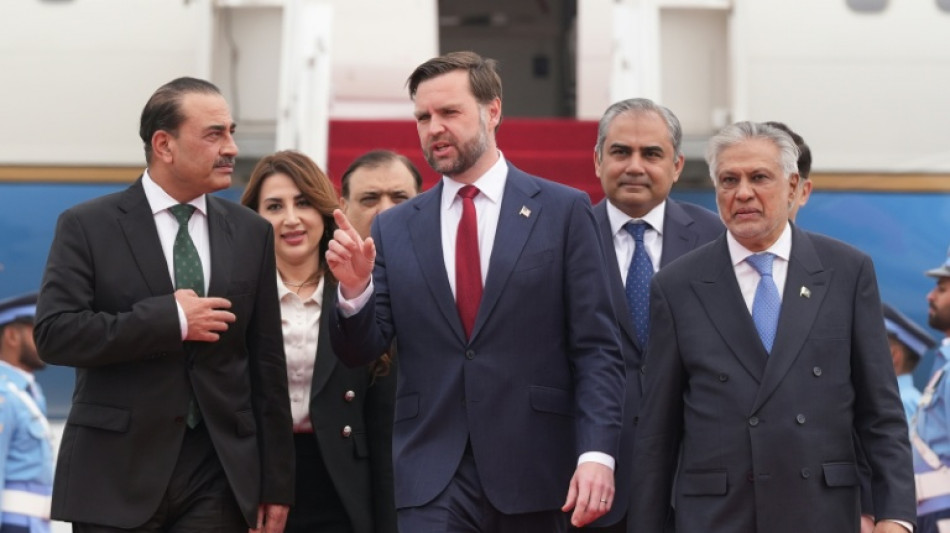
As Pakistan stepped into the global centre-stage through Iran war mediation, it hired a US lobbying firm to push Washington for boosted security cooperation and minerals investment, the contract shows.
The two-year, $1.2-million lobbying agreement, filed in a public official database, began in May, spanning a period officials and experts say is critical to converting the goodwill Pakistan has earned with Donald Trump's administration into tangible bilateral benefits.
But Islamabad could face an uphill battle.
"How long the dramatic improvement in relations will last is uncertain given the history of ups and downs" in ties, said Maleeha Lodhi, Pakistan's former ambassador to Washington.
"It is also an open question whether it will outlast Trump."
The contract directs Capitol Hill-headquartered Ervin Graves Strategy Group to engage with the US Congress and government, and facilitate meetings including with Pentagon and National Security Council officials.
It expands on a short-term agreement struck between Pakistan's Washington embassy and the firm in October, though the new arrangement doubles the monthly payment to $50,000.
Pakistan's foreign ministry did not respond to request for comment on the contract.
A US State Department spokesperson said the two countries "continue to identify areas of cooperation that benefit our nations related to trade and some security priorities".
Governments regularly hire lobbyists to boost their profile among Washington power players.
Pakistan's latest agreement, disclosed under the US Foreign Agents Registration Act, provides direct insight into Islamabad's strategic priorities.
It outlines efforts to restore defence cooperation mechanisms that existed during the Afghanistan war and attract investment in the minerals sector, currently dominated by China.
"The contract highlights aspects of the relationship that align with Trump administration priorities, including critical minerals and counterterrorism," said Elizabeth Threlkeld, a former US diplomat in Pakistan and head of the Stimson Center's South Asia Program.
- Security lens -
The text also demonstrates "an interest in engaging Congress to broaden constituencies of support for the partnership", said Threlkeld.
It includes a direction to emphasise "threats emanating from Afghanistan" and "promote continued US support for Pakistan's counterterrorism efforts" at a time when Islamabad is carrying out strikes on its neighbour in response to militant violence.
Afghanistan's Taliban government denies the country's involvement in militancy in Pakistan.
Powerful Pakistani army chief Asim Munir's rapport with Trump has elevated Islamabad's influence in a bilateral relationship long focused through a security lens.
The US president refers to Munir as his "favourite field marshal", following their acquaintance in the aftermath of conflict with India that Trump helped mediate last year.
A source familiar with the matter said Pakistan's help in US-Iran negotiations to broker their June interim agreement provided a window of opportunity.
"We want to go beyond personal relationships so that the relationship becomes more institutionally based and can outlast changes in government," the source said on condition of anonymity.
Overall, Islamabad's ties with Washington have drifted since the withdrawal of US forces from Afghanistan in 2021 ended a 20-year war that defined much of the relationship.
Pakistan instructed Ervin Graves to work on efforts "for the resumption of... appropriate high-level bilateral defence and security dialogue mechanisms".
According to the contract, this could be in the form of a revived Defense Consultative Group (DCG), the forum that underpinned US-Pakistan cooperation during the Afghanistan war era.
The DCG "gradually became less active as security assistance to Pakistan dwindled", said Shuja Nawaz, Atlantic Council fellow and author of "The Battle for Pakistan: The Bitter US Friendship and a Tough Neighbourhood".
- Cooperation 'fluctuated' -
The partnership at its height included billions in US financing flowing to the South Asian nation, which Washington relied on for military supply routes and counterterrorism cooperation.
That suffered a blow in 2011 when US forces raided a compound in Pakistan and found Osama bin Laden, the mastermind of the 9/11 attacks that killed nearly 3,000 people.
Today "there is no direct US aid worth mentioning", Nawaz said.
A Pakistani security source told AFP that defence ties continued.
"While the scope and intensity of cooperation have fluctuated... security collaboration has rarely ceased," the source said, adding intelligence cooperation resulted in last year's apprehension of an Islamic State group operative allegedly involved in a deadly 2021 attack at the Kabul airport.
The lobbying contract dedicates a section to the minerals sector -- a global strategic priority for Trump's administration -- instructing the firm to "support efforts to identify opportunities for cooperation".
Ervin Graves should "provide recommendations" on Pakistan's policy and investment engagement strategies, and identify possible investors, it says.
That could build on American interest in mining operations in vast southwestern Balochistan province, home to one of the world's largest untapped reserves of copper -- an in-demand resource for AI data centre construction.
In December, Washington pledged $1.25 billion for Balochistan's Reko Diq copper and gold mine.
But Pakistan's least-developed province grapples with a growing separatist insurgency, which has also targeted mining investments by China.
Nawaz said the US-Pakistan relationship would need such headwinds addressed to move past reliance on the possibly fleeting bonhomie of its leaders.
"Pakistan needs to get its domestic act together to make itself economically strong and attractive for foreign investments," he said. "Once that happens, US interest will become stronger."
G.Goel--MT