October 7 survivors, families take centre stage in Israel vote / Photo: BENJAMIN CREMEL - AFP/File

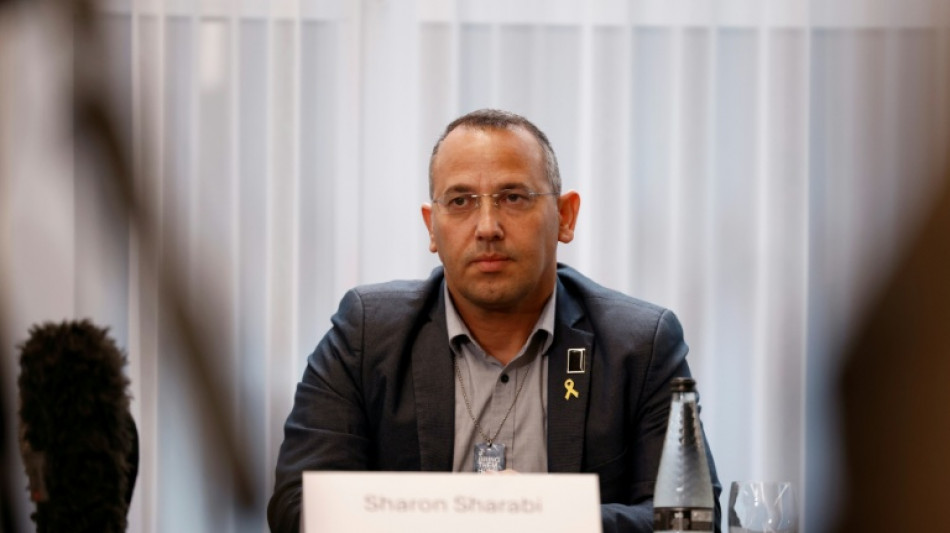
Sharon Sharabi shot into the limelight in Israel after the Hamas attack of October 7, 2023 as he pleaded for the return of hostages dragged into Gaza, including his two brothers.
With Israel heading to the polls for the first time since suffering its worst-ever attack, Sharabi is now taking on another role: candidate.
Sharabi is among a number of people transformed by the attack -- former hostages, bereaved parents and Israelis who fought back on that day -- who are running in the general election on October 27.
They come from diverse political backgrounds, but like all Israelis have in common, they have been reshaped by the trauma of October 7.
Three years on, the election will serve as a referendum on Prime Minister Benjamin Netanyahu, his hard-right government and his response to the attack.
October 7 candidates are sharply divided between supporters of Netanyahu's push for a crushing military victory against Hamas in Gaza, most of which has been reduced to rubble, and those who hold him responsible for the security failure that allowed the attack to begin with.
Sharabi took on a role speaking for the main group of families of hostages as he pressed for the release of his brothers, both kidnapped from their homes by militants.
One brother, Yossi, died in captivity. The other, Eli, was released alive in February 2025.
Sharabi is running on the list of Avigdor Lieberman, a hawkish former Netanyahu ally turned critic of the country's longest-serving prime minister.
Sharabi told AFP he is running "to ensure that Hamas is defeated and can never rise again".
His mission, he said, is to "come to the aid of grieving families who have been abandoned by the current government".
It is a common refrain from families of former hostages who accuse Netanyahu of making their release a secondary priority after his other war aims.
- Sought by all sides -
With polls showing a tight race, most parties seen as having a chance of entering parliament have tapped figures from October 7.
AFP has identified nine candidates who had a loved one killed or taken hostage, or who distinguished themselves in fighting Hamas on the day of the attack.
When he inaugurated the list of candidates of his Likud Party in early September, Netanyahu appeared on stage not with his cabinet members but with Talik Gvili, the mother of a police officer killed in the Hamas attack.
Gvili became well-known to the public as she fought for the remains of her son, whose body was taken into Gaza and finally repatriated this year.
She has been placed ninth on the Likud list, likely guaranteeing her a seat in the parliament, or Knesset. Likud currently holds 32 seats in the 120-member Knesset.
In a video, she explained that she was entering politics to carry on the "torch" of her son, "who, on October 7, went to defend the people of Israel".
Political analyst Myriam Shermer said that Israelis hoped that "those who have suffered the most" and symbolise "bravery and resistance" could bring change.
"Israelis feel the need to be guided by the heroes of October 7," said Shermer, the author of the book "Knesset 2026" on the upcoming election.
- October 7 coalition? -
Gadi Eisenkot, a former military chief who has emerged as Netanyahu's most formidable challenger, recruited on his list Shira Shapira.
On October 7, her son Aner threw back grenades hurled by Hamas as he took shelter, protecting others before being killed.
"In a country whose foundation is family, Israelis can easily imagine that Aner Shapira's courage comes from his mother and will therefore want to vote for her," Shermer said.
Another centrist list, led by former prime ministers Naftali Bennett and Yair Lapid, has tapped retired major general Noam Tibon, who became a national hero after rallying dispersed soldiers to chase out Hamas from the kibbutz where his son was living.
The presence on diverse party lists of people shaped by October 7 has raised an intriguing possibility -- could they ally in parliament, or even form a government that unites the deeply polarised country?
Sharabi said he would "consider a coalition among us" if his goals turn out to be "the same as those of the other elected loved ones of hostages".
But for Shermer, the deep public sympathy earned by October 7 figures may be easily tarnished when they encounter the harsh realities of running for office in Israel.
"Nothing can really withstand over time the aggressiveness seen in the Israeli public sphere," she said.
L.Dubey--MT