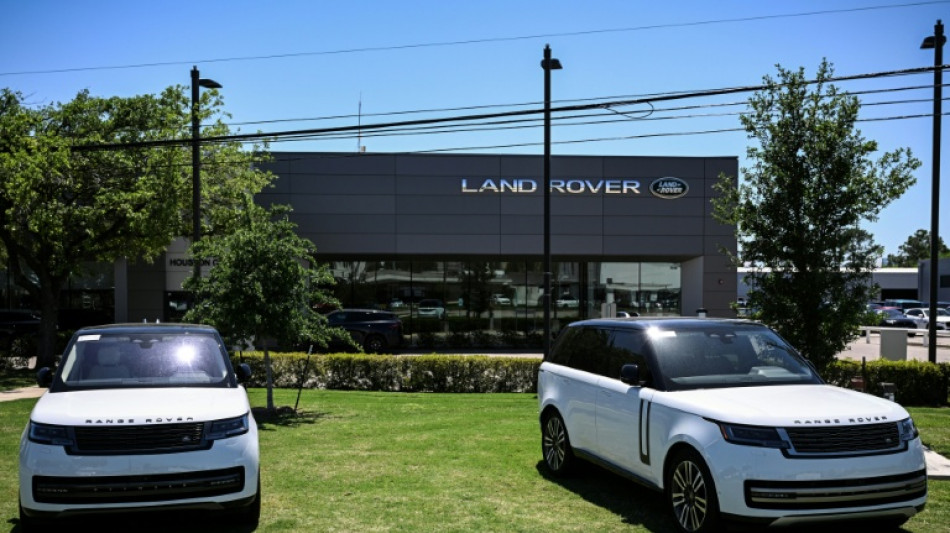
US tariffs, cyberattack drive Jaguar Land Rover into loss / Photo: RONALDO SCHEMIDT - AFP/File

US import tariffs and a debilitating cyberattack pushed Jaguar Land Rover into an annual loss, figures published Thursday showed, although the luxury British automaker's performance improved in the last quarter.
The company, which is owned by India's Tata Motors, recorded a net loss of £244 million ($328 million) in its fiscal year that ended on March 31, as revenues slumped almost 21 percent to £22.9 billion.
Jaguar Land Rover, like other automakers, suffered last year when the United States slapped tariffs on imports, which led the automaker to halt delivery of vehicles to the country in April.
Britain reached a trade deal with the US that brought the automaker some relief in July.
The respite was short lived however as a cyberattack forced Jaguar Land Rover to halt production for more than a month, leading to a hit of £196 million.
Jaguar Land Rover "faced a challenging year with revenue and profit impacted by multiple headwinds, including a pause in production following the cyber incident," chief executive PB Balaji said in a statement.
The tough car market in China and the winding down of production of existing models ahead of the launch of new models also affected performance in the last fiscal year.
The company pointed to a recovery at the start of this year, however, and expressed confidence for the coming year.
"Looking ahead, (Jaguar Land Rover) remains resilient and well placed to address the geopolitical, inflationary and regulatory challenges the industry faces," it said.
F.Garg--MT