Brazil’s Landless Movement Partners with China to Build Affordable Tractors for Family Farms

Brazil’s largest rural social movement is partnering with Chinese manufacturers to build affordable tractors for family farmers. The initiative aims to address a critical gap in the market where small-scale producers are largely ignored by traditional equipment makers, though it faces scrutiny over potential new dependencies on foreign technology.
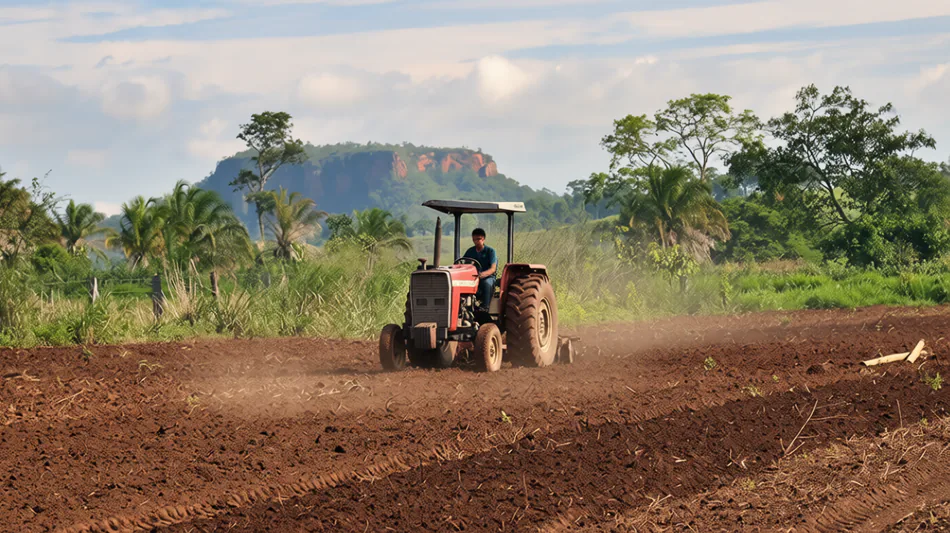
Brazilian family farmers may soon have access to affordable tractors through an unprecedented partnership between Chinese manufacturers and the Landless Rural Workers’ Movement (MST), one of Brazil’s most prominent social organizations. The collaboration seeks to disrupt a domestic agricultural machinery market that has long favored large-scale producers, leaving smallholder farmers with limited and often unsuitable equipment options.
The MST, which emerged in the late 1970s during Brazil’s military dictatorship as a force for agrarian reform, has historically organized land occupations to redistribute latifundios, or large landed estates. Since becoming a national movement in 1984, the organization reports that more than 2,500 such occupations have taken place, granting access to land for approximately 450,000 families. Today, the MST coordinates roughly 200 cooperatives and 1,000 rural producer associations, operating 120 small- to medium-sized processing plants based on agroecological principles.
João Pedro Stedile, an economist and co-founder of the MST, stated that the organization is addressing a critical gap in technological access by partnering with Chinese companies and universities. The goal is to test and adapt smaller, more affordable machinery specifically designed for Brazilian smallholders. Stedile noted that China’s agricultural machinery industry was developed to serve its own population of farmers who typically own plots of no more than one hectare, making their technology inherently suited to the needs of family farming.
This cooperation gained momentum following a memorandum of understanding signed in 2022 between Brazil and China. Since then, Brazilian smallholder sectors have increasingly utilized Chinese resources and knowledge. In 2023, the MST and the University of Brasília established a research center dedicated to the mechanization of family farming. This was followed in 2024 by the opening of a demonstration and training center for Chinese farming machinery in Apodi, Rio Grande do Norte. By February 2025, 40 Chinese-made tractors were loaned to Brazilian farmers for monitored use.
The partnership received further national-level support in May 2025 when Brazilian President Luiz Inácio Lula da Silva and Chinese President Xi Jinping signed 36 memoranda of understanding, including one focused on modern family farming and agricultural mechanization. These agreements have paved the way for plans to construct five factories, marking a significant shift from pilot projects to industrial manufacturing.
The first facility is planned for Maricá, in Rio de Janeiro state. It will be a joint venture between the Chinese state-owned company Sinomach and the Brazilian science and technology firm OZ.Earth. Wagner Soares, the municipal secretary for agriculture and livestock in Maricá, highlighted that the majority of the city’s approximately 1,200 smallholders still rely on traditional hand tools and depend on local government provisions for machinery.
The Maricá factory is estimated to cost BRL 200 million (USD 36 million) and is expected to produce up to 5,000 tractors annually. Construction is scheduled to begin in early 2027. Initially, the plant will assemble tractors using components imported from China, with a strategic aim to gradually localize production and achieve at least 60% domestic content in the finished machines. The municipal government anticipates the facility will create approximately 2,000 jobs.
The need for such intervention is underscored by data on Brazil’s agricultural landscape. According to the most recent agricultural census from 2017, family farming accounts for 77% of the country’s five million rural holdings. However, only 11.5% of these holdings possessed tractors, compared to 24.5% of non-family farms. The Brazilian Institute of Geography and Statistics (IBGE) reported that 88% of mechanized family farms used tractors with less than 100 horsepower.
Despite this demand, the market has failed to supply adequate equipment. A study by the Goiano Federal Institute found that in 2020, only six out of 169 tractor models sold by leading manufacturers in Brazil fell within the sub-100 horsepower range. Furthermore, cost remains a prohibitive barrier; an analysis by the Brazilian government’s Institute for Applied Economic Research (IPEA) indicated that in 2017, even the most basic 15-horsepower tractor cost more than a family farmer’s entire annual income.
The entry of Chinese manufacturers has drawn criticism from domestic industry groups. The Brazilian Association of the Machinery and Equipment Industry (Abimaq) has previously expressed concerns regarding the growing presence of Chinese tractors, citing risks to domestic producers’ market share and potential complexities in servicing the machines. Stedile claimed that Abimaq has resisted efforts to reshape the machinery market by arguing that suitable and affordable equipment already exists, a stance he disputes.
Charles Andrew Tang, president of the Brazil-China Chamber of Commerce and Industry, noted that his organization faces similar resistance while attempting to establish factories for affordable micro-tractors. He argued that Abimaq opposes Chinese industry in Brazil but is seeking to persuade the association that Chinese technology and capital could enhance domestic industry through partnership.
Beyond market competition, experts have raised concerns about technological dependency. There are fears that China’s technological transfer might not be accompanied by the necessary knowledge transfer or the integration of local supply chains, which are essential for developing indigenous capacity. This debate mirrors broader discussions in Brazil regarding Chinese investments in electric vehicle and wind turbine factories.
Sérgio Sauer, who directs the MST-University of Brasília family farming research center, described the risk of new dependence on Chinese technology as a crucial concern. However, he also argued that China’s entry into the sector could increase competition, reducing Brazilian farmers’ reliance on a small number of predominantly American manufacturers. He noted that China has more than 2,000 manufacturers in the sector, offering a broader scope for potential partnerships.
Stedile outlined a long-term vision where the MST would eventually manage the factories, adapting them to incorporate domestic components and develop new machines tailored to local circumstances. Experts have emphasized that avoiding Brazil’s role as merely an assembly site for imported parts requires policies that encourage joint development and the training of workers and researchers.
A 2025 journal article on family farming and rural development in Brazil, co-authored by Brazilian academics, analyzed these initiatives. The paper argued that while current Brazil-China efforts remain focused on pilot projects and technology adaptation, they have limited scope for structural change to Brazil’s agricultural model. It acknowledged that the partnerships could expand mechanization and autonomy for family farming but warned they could also reproduce new inequalities and concentrate control over technologies and production chains beyond Brazilian borders.
The article concluded that while Chinese investments provide opportunities for family farming, only Brazil’s own political and social dynamics can change the unequal reality of the Brazilian countryside.
H.Anand--MT