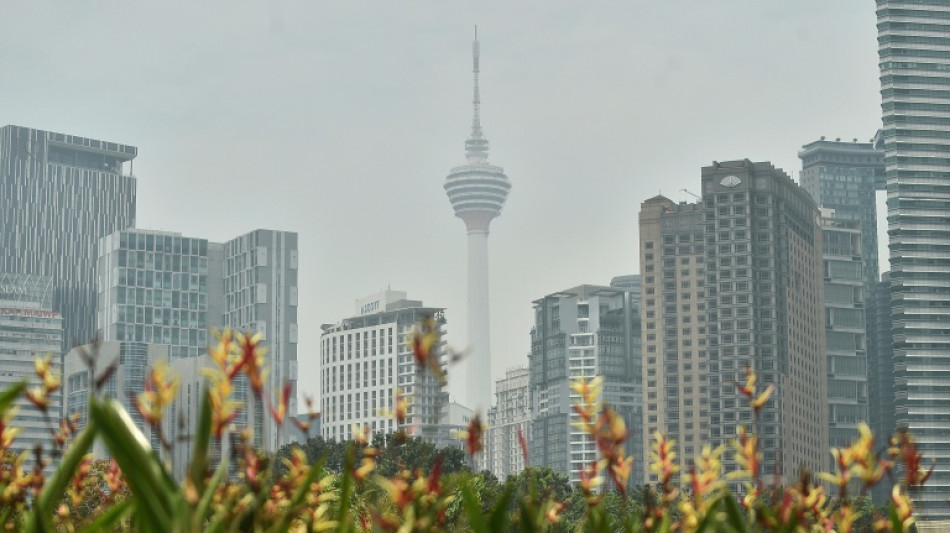
Malaysia's Firefly extends flight cancellations due to haze / Photo: Arif Kartono - AFP

Malaysian low-cost carrier Firefly extended cancellations of flights between Kuala Lumpur and Singapore until Wednesday, the airline said, as haze from fires in neighbouring Indonesia chokes air quality in the region.
Singapore ranked among the world's top two most polluted major cities early Tuesday, according to Swiss-based air quality monitor IQAir, as the fires on Borneo and Sumatra islands -- intensified by a turbo-charged El Nino weather phenomenon -- belch out toxic haze.
The fires have created suffocating local haze, sparking tens of thousands of respiratory illness cases.
Firefly said the extension of flight suspensions between Sultan Abdul Aziz Shah Airport near Kuala Lumpur and Singapore's Seletar Airport, since Saturday, was a "proactive safety measure," the airline said in a statement late Monday.
"Given the evolving weather situation, Firefly is monitoring developments closely. Further updates on flight schedules will be communicated directly to affected customers," it added.
In Singapore, which recorded an Air Quality Index (AQI) reading of 193 on Tuesday, the government activated schemes that allow citizens to receive affordable care for haze-related health conditions.
Readings above 150 are classified as unhealthy, while levels above 300 are considered hazardous.
The city-state last activated its haze subsidy scheme in 2015 when smoke from Indonesian forest fires cloaked Southeast Asia in toxic smoke for weeks, driving up illnesses and forcing school closures and flight cancellations.
In neighbouring Malaysia, schools reopened in most states Tuesday as air quality improved slightly, but remained closed across three states, one federal territory and several districts.
Indonesia regularly battles wildfires during the dry season, but the fires have intensified this year because of El Nino, set to be one of the strongest since comparable records began four decades ago.
Experts have also pointed to slash-and-burn land-clearing practices that have changed the naturally fire-resistant landscape.
W.Srinivasan--MT