US stocks extend gains, shrugging off ceasefire worries / Photo: MAHMOUD ZAYYAT - AFP

Wall Street stocks finished higher Thursday after a shaky start, adopting an optimistic view of the Middle East ceasefire despite largely stalled traffic in the Strait of Hormuz, which boosted oil prices.
After surging on Wednesday following the announcement of an Iran-US truce ceasefire, US stocks pulled back in the early going amid continued clashes between Israel and Lebanon and extremely limited tanker traffic in the Hormuz Strait despite the ceasefire.
But US stocks moved into positive territory in late morning and rose further as the session progressed. Some commentators said the confirmation of talks next week between Israel and Lebanon had driven shares higher.
"We don't actually have a full ceasefire yet, but the market's a forward-looking mechanism and it's trading as if the deal's pretty much done," said Adam Sarhan of 50 Park Investments.
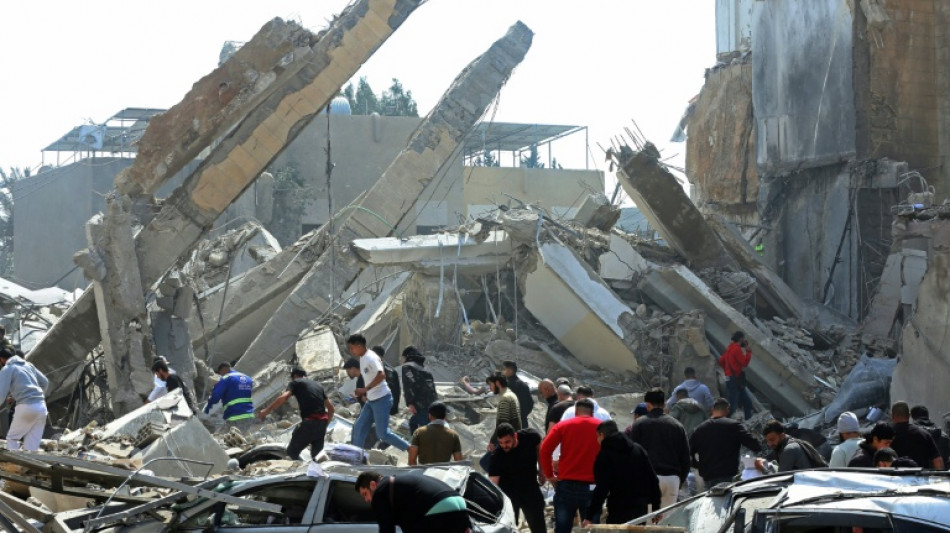
The main US oil contract, West Texas Intermediate, jumped above $100 a barrel before dipping once again as international calls mounted for the ceasefire to be extended after a massive wave of Israeli strikes on Lebanon killed more than 200 people.
WTI finished the day up 3.7 percent at $98.87 a barrel.
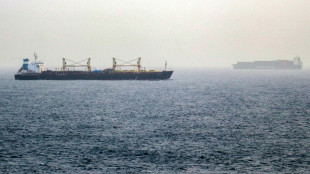
Just 10 vessels have passed through Strait of Hormuz since the Middle East war ceasefire took effect, according to maritime tracking data.
Only one of those tankers, the "MSG," is not Iranian.
The Gabon-flagged ship went through Thursday with around 7,000 tons of Emirati fuel oil, and is headed to India, according to the MarineTraffic monitor.
"Oil prices will likely remain elevated and choppy until a more permanent agreement is struck between all parties," said Aarin Chiekrie, equity analyst at Hargreaves Lansdown.
Anthony Kettle at RBC BlueBay Asset Management cautioned: "Even if the ceasefire holds, it will take time for energy exports from the region to return to more normalized levels, so there will be an impact on growth and inflation that is still difficult to ascertain."
"It should also be noted that there has been significant damage to infrastructure in some major energy exporters," he said.
Earlier, Europe's main markets closed down, Frankfurt shedding just north of one percent.
Asian markets had also finished in the red.
"While progress towards a more permanent resolution in the Middle East will dominate short-term market moves, it's earning power that drives stock prices in the long term," Chiekrie said ahead of the first-quarter earnings season.
Some companies have already begun alerting markets to the impact of the war, which began on February 28, on their earnings for the January-March period.
- Key figures at around 2015 GMT -
Brent North Sea Crude: UP 1.2 percent at $95.92 a barrel
West Texas Intermediate: UP 3.7 percent at $97.87 a barrel
New York - Dow Jones: UP 0.6 percent at 48,185.80 (close)
New York - S&P 500: UP 0.6 percent at 6,824.66 (close)
New York - Nasdaq: UP 0.8 percent at 22,822.42 (close)
London - FTSE 100: DOWN 0.1 percent at 10,603.48 (close)
Paris - CAC 40: DOWN 0.2 percent at 8,245.80 (close)
Frankfurt - DAX: DOWN 1.1 percent at 23,806.99 (close)
Tokyo - Nikkei 225: DOWN 0.7 percent at 55,895.32 (close)
Hong Kong - Hang Seng Index: DOWN 0.5 percent at 25,752.40 (close)
Shanghai - Composite: DOWN 0.7 percent at 3,966.17 (close)
Euro/dollar: UP at $1.1707 from $1.1663 on Wednesday
Pound/dollar: UP at $1.3441 from $1.3394
Dollar/yen: UP at 159.06 yen from 158.57 yen
Euro/pound: UP at 87.09 pence from 87.07 pence
burs-jmb/sst
L.Mathur--MT