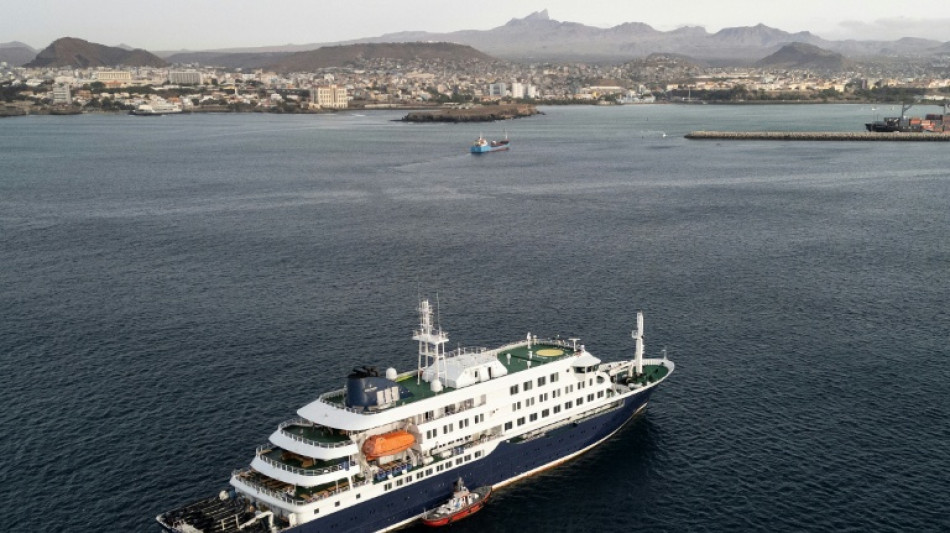
First hantavirus infection could not have been during cruise: WHO expert / Photo: - - AFP

The first hantavirus case on the MV Hondius could not have been infected during the cruise, a World Health Organization expert told AFP on Wednesday.
The polar expedition ship left Ushuaia in Argentina on April 1 for a cruise across the Atlantic Ocean to Cape Verde, where it arrived on Sunday, with around 150 passengers and crew on board.
The WHO, which was alerted Saturday to a rare but deadly outbreak of hantavirus aboard the Hondius, has determined that the first of three people to die must have been infected before boarding the ship.
Out of eight confirmed and suspected hantavirus cases, a 70-year-old Dutch passenger was the first to fall ill.
He began showing symptoms including fever, headache and mild diarrhoea on April 6, and developed respiratory distress on April 11, dying on board the same day, the WHO said.
"The incubation period -- the time between infection and the onset of symptoms -- is between one and six weeks", but it is typically "more like two to three weeks", Anais Legand, a technical expert on viral haemorrhagic fevers at the WHO, told AFP.
So the first case "could not have been infected on the ship, or on one of the islands" it called at on the way towards Cape Verde.
The man "very clearly had exposure before boarding the ship", an exposure "certainly linked to a rodent", she said.
Among the three people who have died, only the Dutch man's 69-year-old wife has been confirmed positive so far for hantavirus.
She had been suffering gastrointestinal symptoms when accompanied her husband's remains ashore on the remote British territory of Saint Helena on April 24, before flying to Johannesburg on April 25, and dying the following day.
A third passenger, a German national, is also suspected of having died from hantavirus on the ship on May 2.
Two others who were on the ship and are being treated in hospitals in Johannesburg and Zurich have also tested positive, while three suspected cases have been evacuated from the ship and are being flown to the Netherlands.
The vessel, which has been anchored off the Cape Verde capital Praia since Sunday, set sail Wednesday bound for Spain's Canary Islands.
Hantavirus is usually spread from infected rodents, typically through urine, droppings and saliva.
There is documented human-to-human transmission for only one strain, Andes virus -- detected in both living confirmed cases.
- Cases in Argentina -
The case fatality rate for the Andes virus can reach up to 40 percent, which is "high", said Legand.
"For this virus, there is no evidence that the disease can be transmitted to someone before symptoms appear," she stated, with the highest risk of transmission during the first week of illness.
According to the initial evidence available to the WHO, the Andes virus can only be transmitted from one person to another in cases of close contact.
Legand gave the example of an "exchange of saliva" when couples kiss, while underlining that investigations were ongoing to better understand human-to-human transmission of the strain.
The WHO says that before boarding the MV Hondius, the Dutch couple travelled in South America, including Argentina.
According to data published Monday by the Argentine health ministry, 42 new cases of hantavirus have been reported in the country this year.
The ministry also reported a family cluster in the southern Chubut region, with suspected human-to-human transmission.
- WHO team on board -
A day before the three suspected cases were evacuated from the Hondius on Wednesday, two WHO representatives joined the ship to work on an exposure assessment and help the crew keep the passengers properly informed and reassured, said Legand.
The cruise ship should arrive at a port in Tenerife in the Canaries "within three days", according to the Spanish authorities.
"Discussions between the ship, the national authorities, but also the medical authorities and WHO are ongoing," WHO spokesman Christian Lindmeier told AFP.
This is "to establish the protocol once the ship goes to dock at the harbour, how best these people on board will be treated, how quickly they can be removed off the ship, but also how safely they can be removed," he said.
The bodies of the three people who died have not been moved, according to Legand.
They remain in Saint Helena, Johannesburg, and in a cold storage room on the MV Hondius.
F.Pathak--MT