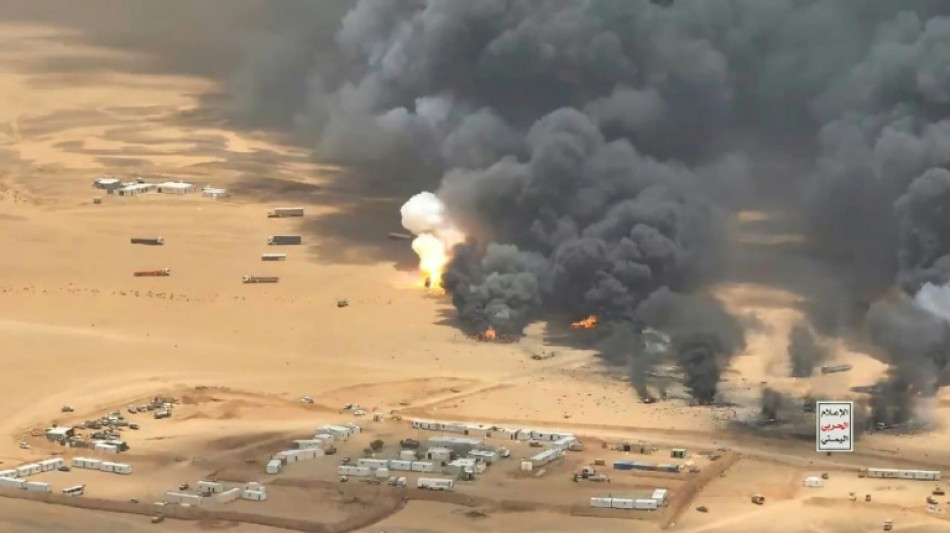
Saudi vows response as Houthis hit oil sites in worst attack in years / Photo: - - ANSARULLAH MEDIA CENTRE/AFP

Saudi Arabia on Tuesday threatened to hit back after a wave of missiles from Yemen's Houthis set oil facilities ablaze and wounded dozens, the Iran-backed rebels' heaviest attack in years.
The overnight attacks caused "temporary" shutdowns at oil sites and left 73 injured, Saudi authorities said, a reminder of the danger posed by the group across the southern Saudi border.
Fighting between the Tehran-supported Houthis and Saudi forces has reignited after a four-year truce collapsed in July, months into the Middle East war between the United States and Iran.
In recent days, hundreds have died in clashes between the Houthis and Saudi-backed government forces around the Bab al-Mandab strait, the mouth of the vital Red Sea shipping route.
The Houthi attacks on energy facilities are likely to increase upward pressure on oil prices, which have spiked since Iran blockaded the Strait of Hormuz, slowing Gulf shipments to a trickle.
Saudi Arabia will "take all necessary measures to defend its sovereignty", a foreign ministry statement said, demanding a halt to the Houthi strikes and their attacks on Saudi oil tankers in the Red Sea.
The Houthis fired dozens of ballistic missiles, their military spokesman said.
They hit Abha International Airport, King Khalid air base and facilities belonging to state oil giant Aramco in Abha and Jizan, according to the rebels' official media.
- Grim images -
Jizan, on the Red Sea coast just north of Saudi's Yemen border, has one of the country's biggest oil refineries with a capacity of 400,000 barrels per day.
According to maritime tracking company Kpler, it was out of action for several weeks until at least August 20 following Houthi attacks.
The latest attacks came after the rebels accused Riyadh on Monday of a prison attack that killed 11 people and left 20 inmates missing, according to the rebels' Al Masirah TV channel.
Grim images from the scene showed rescuers digging in the rubble with their bare hands and carrying bodies wrapped in blankets.
The Houthis triggered a return to hostilities in Yemen's civil war in July, when they let an Iranian plane land in defiance of Saudi control of Yemeni airspace.
They have also been attacking Saudi oil tankers in the Red Sea, a vital export route since Iran blockaded the Strait of Hormuz as part of its war with the United States.
- 'True red line' -
The Saudi-led coalition, which has been fighting the Houthis on the government's behalf since 2015, also said it would respond to the latest attacks.
The coalition's Joint Forces Command will "take all necessary measures and actions to respond to the sources of the threat and neutralise its danger", a statement said.
An energy ministry source told the Saudi Press Agency that "several energy sector facilities and installations" in the south were targeted.
"The attacks caused fires at several locations, leading to a temporary halt in some operations" as well as several injuries, the source was quoted as saying.
Andreas Krieg, a Gulf expert from King's College London, said the Houthi attacks create an "extremely uncomfortable dilemma" for Crown Prince Mohammed bin Salman, the de facto Saudi ruler.
After four years of trying to withdraw from the Yemen conflict, "restraint now carries the risk of allowing the Houthis to dictate the spiral of escalation", he said.
"Saudi Arabia's immediate response is likely to remain measured, involving airstrikes, intelligence support, and the reinforcement of Yemeni government forces," added Krieg.
"However, should attacks on Saudi cities persist, maintaining this restraint will become increasingly difficult. In effect, the Houthis are testing exactly where Riyadh's true red line now lies."
F.Pathak--MT